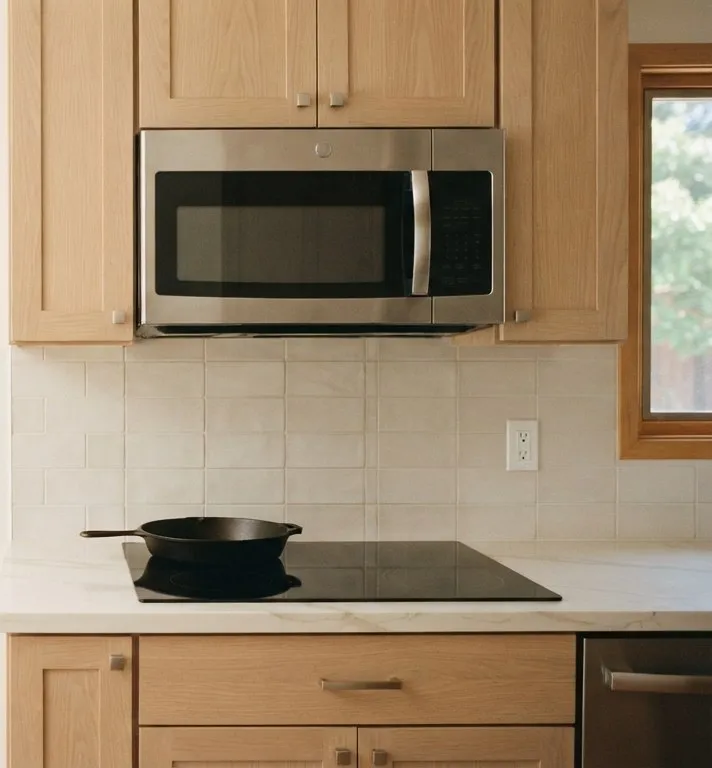
Kitchens in San Jose run on every kind of cooktop: gas burners on PG&E service, radiant glass tops, induction, and pro-style rangetops from Wolf, Thermador and Viking. San Jose Appliance Care connects you with local companies for cooktop repair in San Jose and for microwave repair, including the over-the-range microwaves that sit above so many of those cooktops and built-in and drawer models. Because the three cooktop technologies fail in completely different ways, the useful first step is working out which one you have. The microwave has its own section below, including the one part of it no homeowner should open.
First, which cooktop do you have?
| Type | How it heats | Typical trouble | Check before calling |
|---|---|---|---|
| Gas (open burners or gas on glass) | Flame lit by a spark igniter | Clicking without lighting, weak or uneven flame | Burner caps seated, ports dry and clear |
| Radiant electric (smooth glass) | Coil element glowing under the glass | One zone dead, cracked glass | Breaker, then look for cracks |
| Induction (smooth glass) | Magnetic field heats the pan directly | Zone won’t start, error on display | Magnet test on the pan, pan size |
| Coil electric | Exposed metal coil | Element dead or heating on one setting only | Element seated firmly in its socket |
Gas burners that won’t light or won’t stop clicking
GE Appliances’ support page lists four common causes of slow ignition, no ignition or constant clicking on gas surface burners: burner heads clogged by spillovers or cleaning, moisture sitting in the ignition port and flame ports, an electrode that isn’t seated flush with the cooktop, and a burner head or cap placed on the wrong burner. The fix for most of these is drying time and a careful cleaning, not a part. GE also says a burner can take up to 10 or 12 clicks to light even when nothing is wrong.
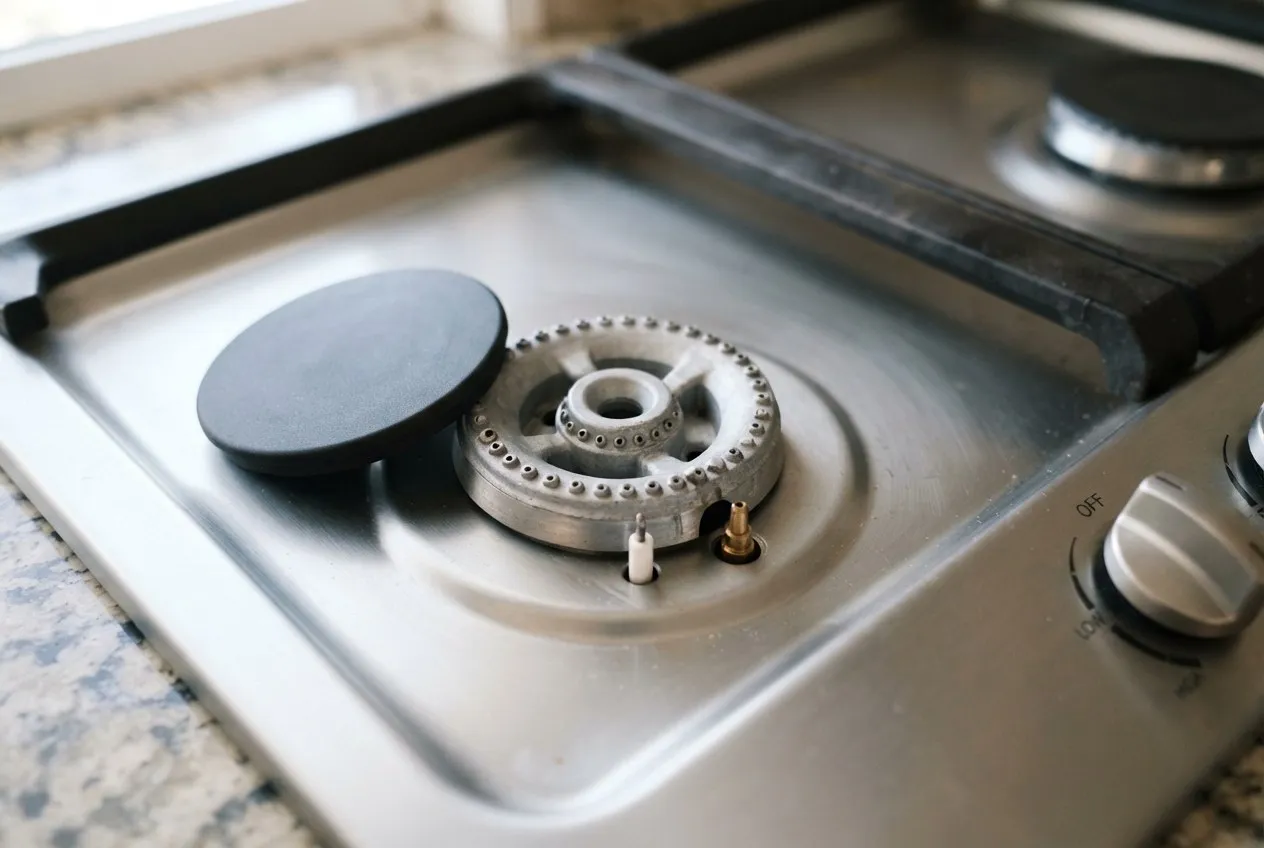
If the burners click while the knobs are off, turn every knob fully to OFF and make sure each one pops back out. If the clicking continues after the cooktop has dried and the knobs are off, GE’s guidance is that service is needed. HomeGuide prices a gas stovetop igniter replacement at $100 to $200.
Any smell of gas changes the order of events. PG&E’s guidance is to leave and call 911, then PG&E; the oven and range repair page covers that in detail.
Glass tops: dead zones and cracks
A radiant zone that won’t heat is usually the element under the glass, its switch, or the wiring to it. HomeGuide puts a radiant element replacement under a glass top at $120 to $330 installed, compared with $90 to $175 for an exposed coil element.
Cracked glass is a different matter. GE Appliances says not to use a cooktop with cracked ceramic glass until it’s repaired, and it applies that to radiant, induction and gas-on-glass surfaces alike. On a range with a glass top, GE advises against using the oven as well, because the oven vents out the back or backsplash onto the cooktop surface. Cracks can’t be patched. HomeGuide puts a glass stovetop replacement at $200 to $600 for a basic electric range and $300 to $1,000 for induction.
Induction: most “failures” are the pan
Induction heats the cookware directly through a magnetic field, so it only works with pans that respond to a magnet. KitchenAid’s test is quick: hold a magnet to the bottom of the pan, and if it sticks firmly, the pan is compatible. Cast iron, enameled steel and multi-layer pans with a magnetic base work. Aluminum and copper generally don’t unless they have a magnetic base plate. KitchenAid also notes that a pan too small for the cooking zone won’t be detected, so the zone simply won’t start.
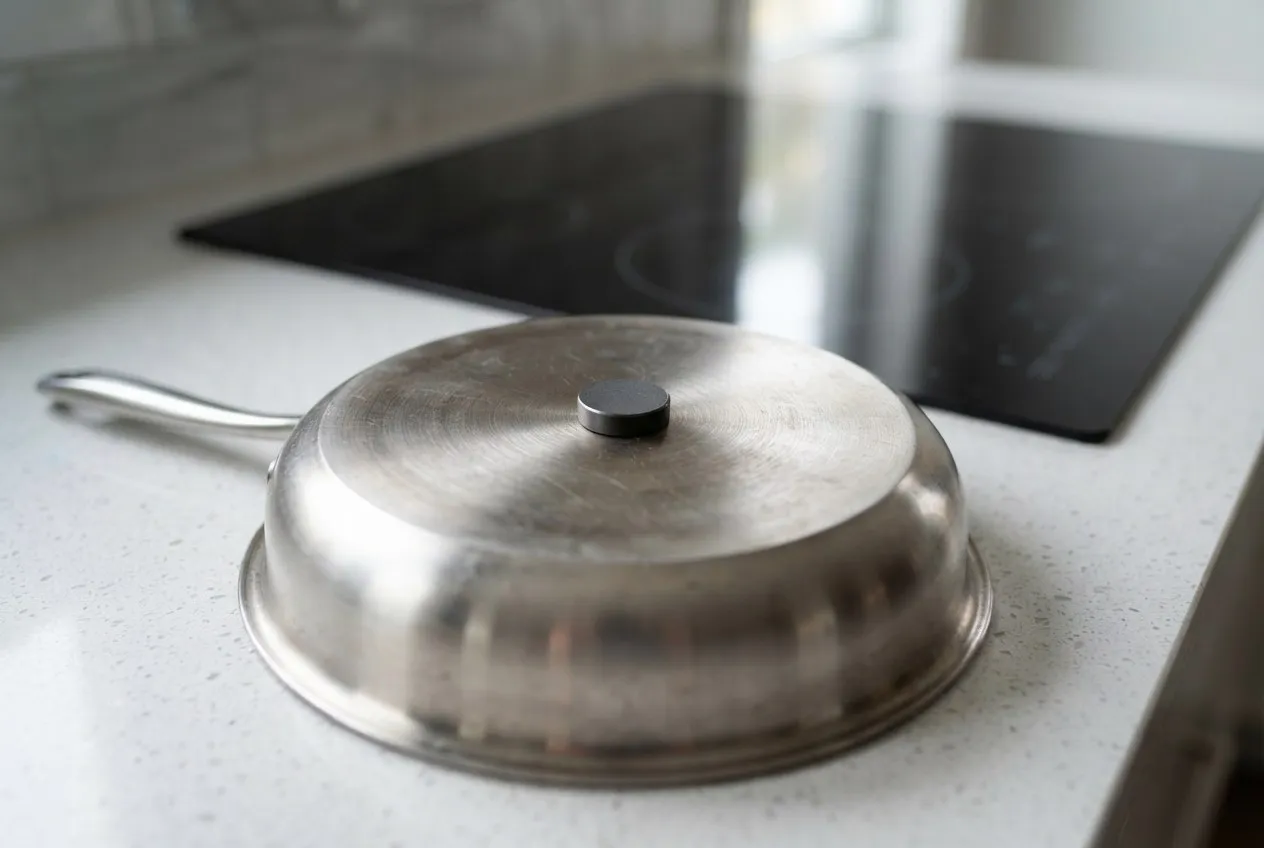
If a known-good cast iron pan still won’t heat on one zone, or the cooktop shows a fault code, write down the code and the model number before you call. Induction electronics differ by brand, and a company that works on Thermador or Wolf induction may not be the one that stocks parts for a mainstream model.
Thinking about switching to induction?
If your gas cooktop is old and you’re weighing a replacement rather than a repair, you can try induction at home first. PG&E runs an induction cooktop loaner program for residents in its service territory: a countertop induction unit, an induction-ready pan and a magnet, borrowed for two weeks at no cost. It’s a cheap way to find out whether you like cooking on it before committing to new cookware.
Over-the-range and built-in microwaves
This section focuses on microwaves mounted over a range or built into cabinetry, because HomeGuide notes countertop models are typically cheaper to replace than repair. HomeGuide puts built-in and over-the-range microwave repairs at $130 to $330, more if the job needs cabinet work or a new trim kit, and explains why: it takes two people to take down and reinstall a heavy wall-mounted unit.
The common faults and their national prices, again from HomeGuide:
- Runs but doesn’t heat. Often the magnetron, the high-voltage diode, or both. A magnetron replacement runs $100 to $300; a diode $80 to $170. HomeGuide notes technicians often replace the two together.
- Door won’t latch or close properly. The FDA says not to operate a microwave if the door doesn’t close firmly or is bent, warped or otherwise damaged, and to contact the manufacturer when hinges, latches or seals are damaged. A door assembly kit costs $100 to $300 as a part.
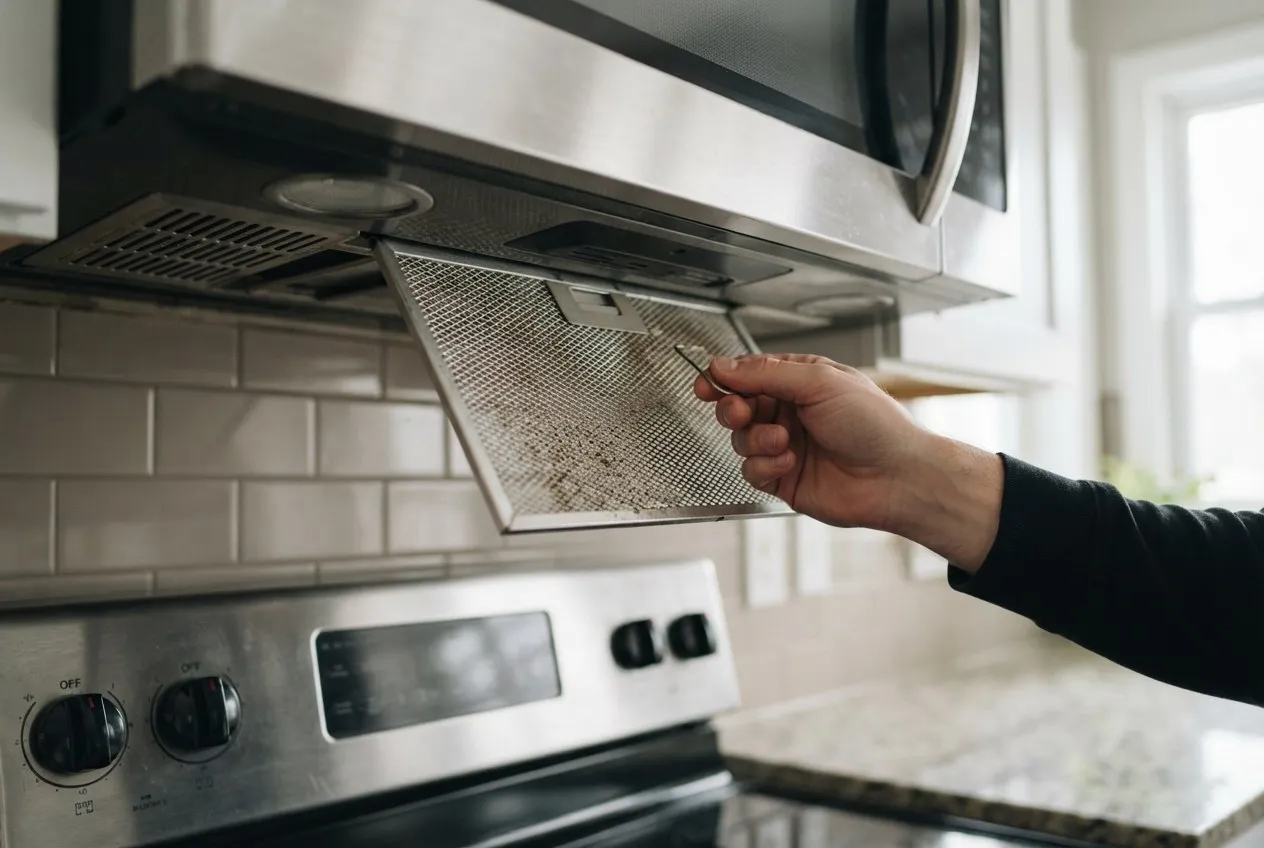
- Grease or charcoal filter clogged. A new one costs $20 to $40 and is an owner job.
Keep the model number handy. It’s on a label, often inside the door frame, and it decides whether parts are still available.
Small fixes you can handle, and what the parts cost
Plenty of microwave complaints never need a technician. HomeGuide’s parts prices give a sense of what an owner can replace from the outside: a new grease, charcoal or air filter at $20 to $40, a glass turntable tray at $20 to $80, and a door handle at $25 to $130. It puts do-it-yourself microwave repairs at $20 to $130 overall, depending on the part. A turntable that won’t spin is worth checking for a tray that isn’t seated on its coupler before assuming the motor has failed.
Age changes the math. HomeGuide notes that parts for microwaves more than five years old can cost extra when they’re in short supply, which is one more reason to get the model number to the repair company before the visit rather than after.
Why the microwave cabinet stays closed
Of everything on this page, the microwave is the one where opening the cabinet yourself is dangerous. Federal rules for microwave ovens (21 CFR 1030.10) require a permanent label reading “This Device is to be Serviced Only by Properly Qualified Service Personnel,” and the required user instructions say the oven shouldn’t be adjusted or repaired by anyone else. The reason sits inside the cabinet: the high-voltage section operates at up to about 5,000 volts, and its capacitor can hold a dangerous charge for a long time after the microwave is unplugged. The long-standing Sci.Electronics.Repair FAQ on microwave ovens calls them probably the most dangerous consumer appliance to service and notes that experienced technicians have been electrocuted.
What that means in practice:
- Clean the cavity and door seals, replace the glass tray, and change grease and charcoal filters yourself.
- Leave anything behind the outer cabinet or control panel to a technician, even if a video makes it look simple.
- Don’t run a microwave with a damaged door, broken latch or bent frame. The FDA notes the federal standard limits leakage to 5 milliwatts per square centimeter over the oven’s life, and it ties safe use to a door, hinges, latches and seals that are undamaged.
Cooktop and microwave repair costs at a glance
| Repair | National typical cost |
|---|---|
| Microwave repair, most jobs | $100 to $250 |
| Over-the-range or built-in microwave repair | $130 to $330 |
| Magnetron replacement | $100 to $300 |
| High-voltage diode | $80 to $170 |
| Gas stovetop igniter | $100 to $200 |
| Radiant element under glass | $120 to $330 |
| Coil element | $90 to $175 |
| Glass cooktop replacement | $200 to $1,000 |
All figures are HomeGuide national averages. Labor is quoted at $50 to $125 an hour, with minimum service fees of $70 to $130 that typically include the first hour. The appliance repair cost guide puts these side by side with other kitchen repairs.
Is it worth fixing?
For microwaves, HomeGuide’s rule is to repair when the fix costs less than half of a replacement. It gives microwaves a life of 7 to 10 years and warns that manufacturers may stop producing replacement parts for units older than four to seven years. Premium built-in microwaves under five years old are usually worth repairing; cheap countertop models usually aren’t.
Cooktops follow the same logic with bigger numbers. A dead igniter or a single radiant element is a modest repair on almost any cooktop. A cracked glass top on an older, inexpensive radiant range can approach the cost of a new one, while the same crack on a high-end induction unit is often still worth replacing. Our repair or replace guide works through that decision.
When you call San Jose Appliance Care, tell us the brand, whether it’s gas, radiant or induction (or which microwave style), and what it’s doing. We’ll connect you with a local company that works on that equipment in San Jose, Mountain View or elsewhere in our area, and you can ask them about the diagnostic fee and a written estimate before they schedule the visit.