Is the drum full of gray water again? Or is the machine walking across the laundry room floor on the spin cycle? Washer repair in San Jose usually starts with one of a handful of complaints: it won’t drain, won’t spin, won’t start, leaks, or smells. San Jose Appliance Care connects households in San Jose, Sunnyvale, Santa Clara and the rest of the South Bay with local companies that repair top-load and front-load washing machines, stacked laundry centers and all-in-one washer dryers. Give us the brand and your ZIP code and we’ll put you through to a company that services that machine.
Washer not draining: four checks before you book
A washer that won’t drain is the complaint you’re most likely to fix yourself, so it’s worth ten minutes before anyone comes out. These checks come from Whirlpool’s own troubleshooting guidance and apply to most brands.
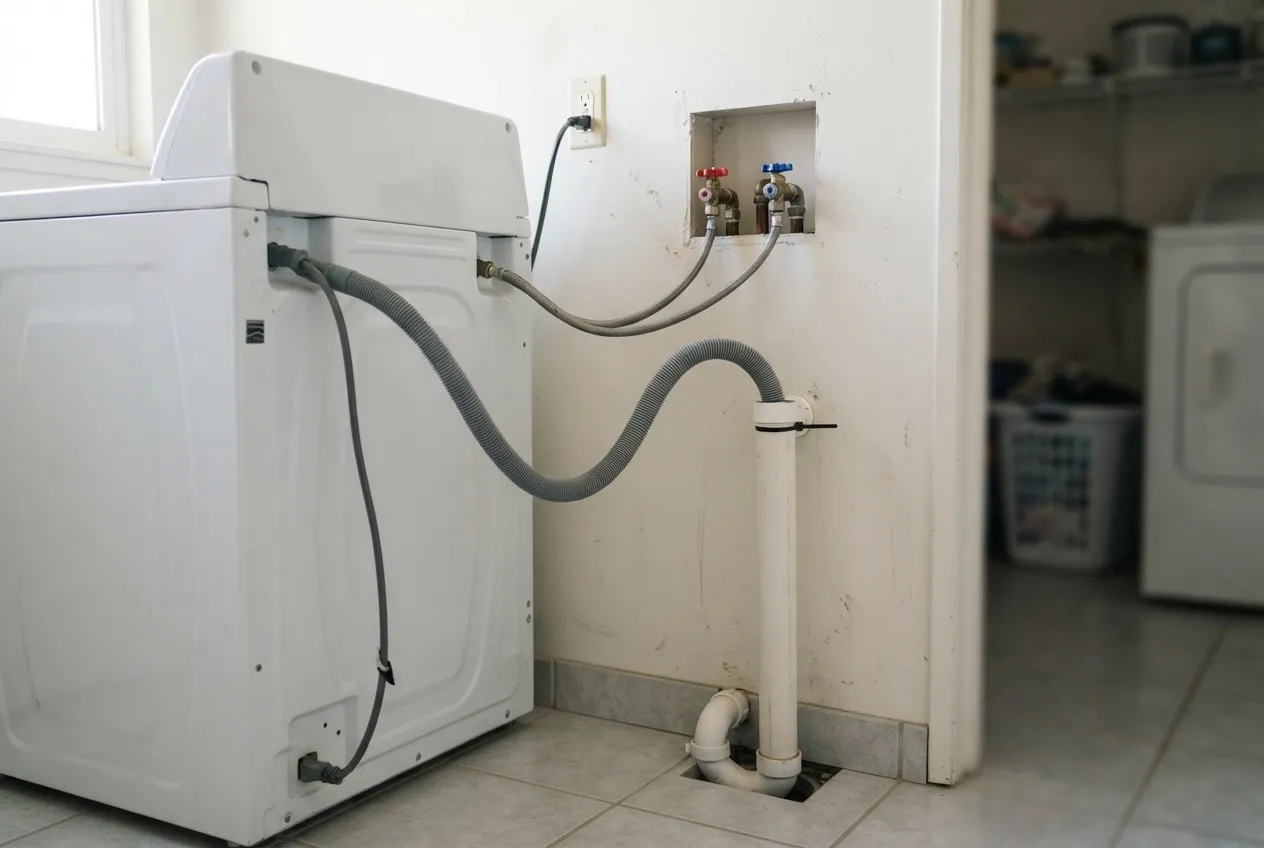
- The drain hose. Look for a kink behind the machine, especially if the washer was recently pushed back into place. Whirlpool also warns that the hose shouldn’t extend more than 4.5 inches into the standpipe; push it deeper and drained water can siphon back into the tub.
- Standpipe height. The pipe the hose drains into needs to be between 30 and 96 inches tall. Higher than that, and the pump can’t lift the water out.
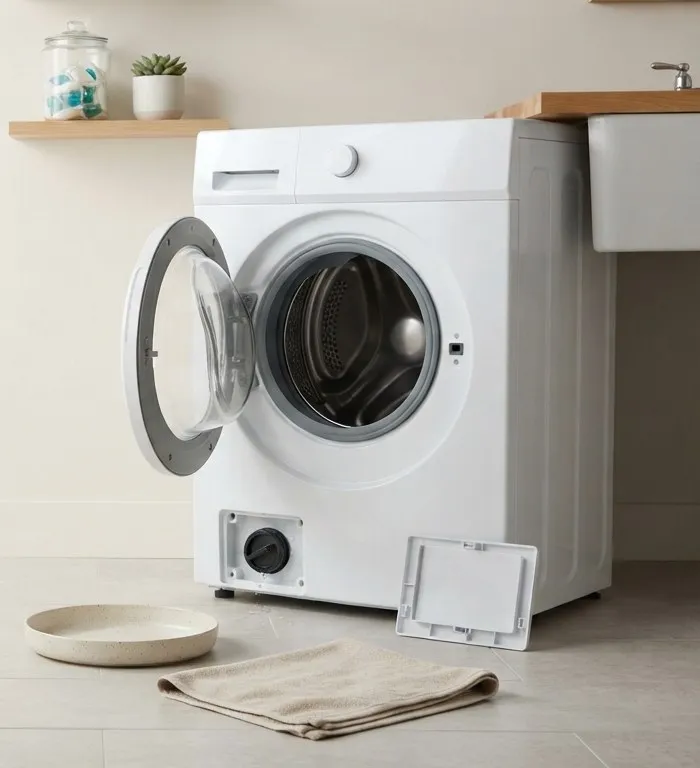
- The pump filter. Most front-loaders have a small access door low on the front with a filter behind it. It catches coins, hair ties and lint. Put down towels first; a full tub drains through here.
- Suds. Too much detergent, or regular detergent in an HE machine, creates enough foam to stop the pump and the spin. Run a rinse cycle with no soap and see whether it clears.
A heavy or lopsided load can also stop the spin, and delicate cycles use slower spins that leave clothes wetter. If you’ve ruled all of that out and the pump hums without moving water, or makes no sound at all, the problem is inside the machine.
When the part itself has failed
Here’s what tends to wear out, what it looks like from the outside, and what the repair costs nationally according to Fixr. These are national prices, not local quotes.
| Fault | What you notice | National range |
|---|---|---|
| Lid switch | Top-loader fills but won’t agitate or spin | $85-$160 |
| Coupling | Motor runs, drum barely moves | $85-$160 |
| Drain hose | Water on the floor at the back | $95-$170 |
| Belt | Burning smell, drum won’t turn | $120-$175 |
| Door lock | Front-loader won’t start or won’t release the door | $110-$200 |
| Bearings | Loud grinding or roaring on spin | $150-$225 |
| Transmission | Top-loader won’t agitate even with a good motor | $200-$350 |
| Pump | Won’t drain after filter and hose are clear | $300-$400 |
Grouped by symptom instead of part, Fixr lists leaks at $75-$200, won’t-drain repairs at $150-$300, won’t-spin at $150-$500 and won’t-start at $200-$400. Diagnostic visits run about $50-$100 and are sometimes waived if you go ahead with the repair; ask how the company handles it before the visit. Our appliance repair cost guide puts these side by side with other appliances.
Bearing failure on a front-loader deserves a word of warning. The bearings sit behind the drum, and replacing them usually means taking the tub apart. On a machine near the end of its life, that job is often where the repair-or-replace question gets decided.
Top-load and front-load machines fail differently
The two designs don’t share a failure list, and they don’t share a price list either. Fixr’s typical ranges are $150-$275 for top-loaders, $200-$350 for front-loaders and $250-$450 for integrated (built-in or panel-ready) models.
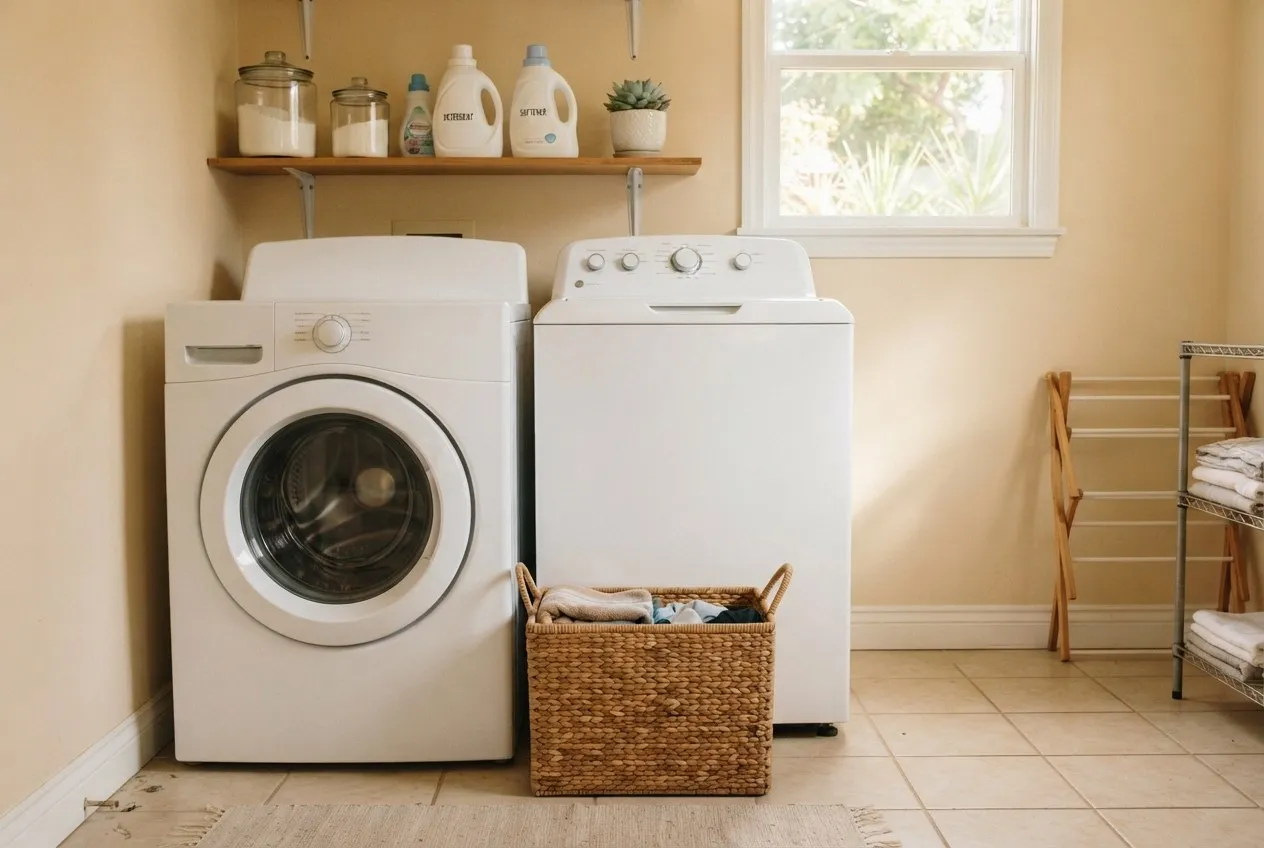
Top-loaders with an agitator lean on a lid switch, a transmission or gearcase, and in older designs a coupling between motor and transmission. They’re mechanically simpler and, by Fixr’s figures, last longer: about 14 years on average.
Front-loaders add a door lock that must engage before the cycle starts, a pump filter that needs regular cleaning, and a rubber door gasket (the boot) that’s easy to tear and prone to odor. Average life is closer to 11 years.
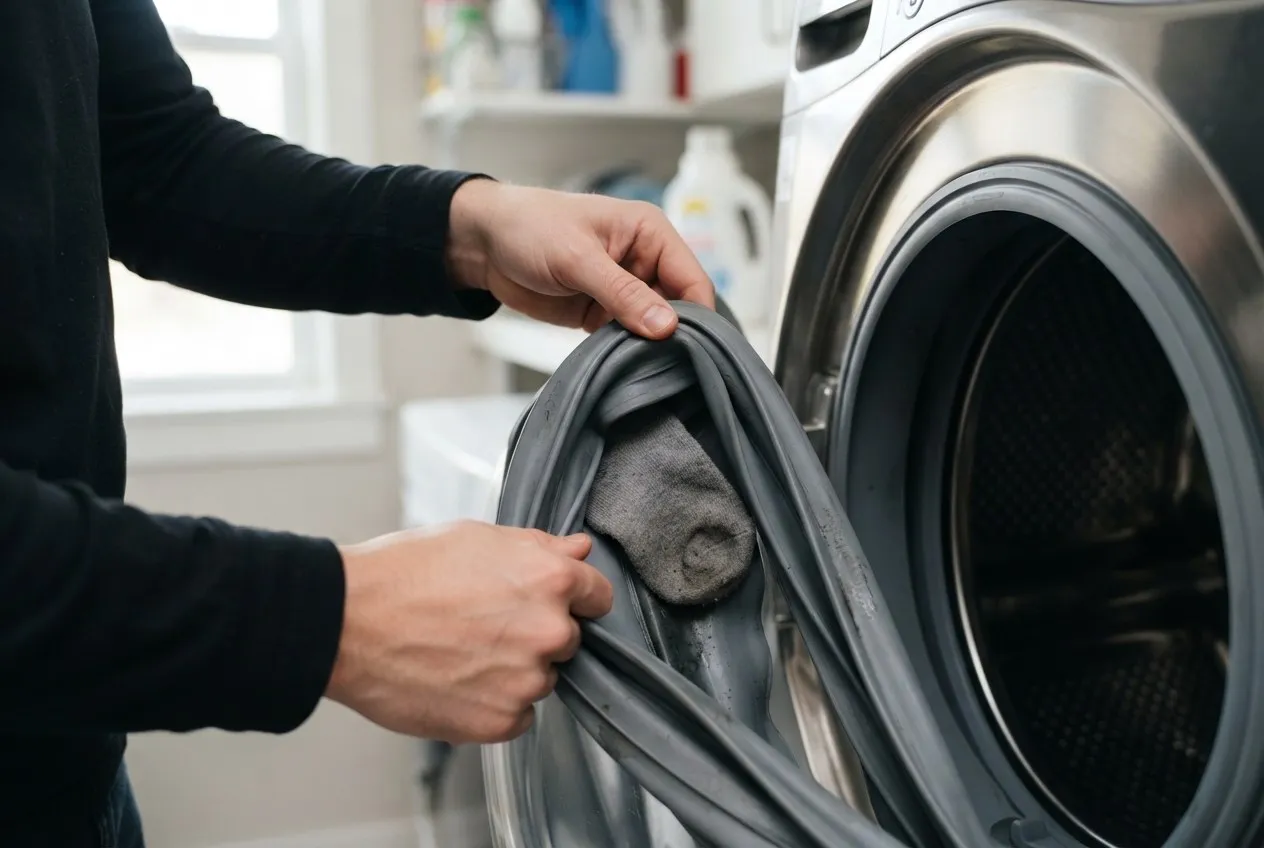
That musty smell deserves its own paragraph, because it usually isn’t a repair at all. LG and Samsung both trace it to moisture and detergent residue trapped in the gasket, dispenser and tub. Their advice: wipe the gasket and pull out anything caught in its folds, run the tub-clean cycle about once a month, use HE detergent in the right amount, and leave the door open between loads. If you’ve done all that and the gasket is torn or the mold is inside the tub seal, that’s when a technician is worth calling.
Is it worth repairing a 10-year-old washer?
Sometimes yes, often no, and the machine type changes the answer. A ten-year-old front-loader is near Fixr’s 11-year average life; a ten-year-old top-loader may have four good years left.
Weigh these before you decide:
- The repair price against the replacement price. Fixr suggests replacing when the repair costs more than half the price of a comparable new washer, and puts new machines at roughly $450 to over $2,000.
- What failed. A $120 belt or a $150 door lock on a ten-year-old machine is usually worth doing. Bearings or a transmission on the same machine usually isn’t.
- Running costs. Valley Water, the Santa Clara County water agency, estimates that a 10-year-old standard clothes washer costs about $185 more per year in water and energy than a new high-efficiency model. That gap adds up over the life of a replacement.
One local note that saves a wasted search: Valley Water says it does not offer rebates on high-efficiency clothes washers. It does offer a rebate for connecting a washer to a laundry-to-landscape graywater system. The repair or replace guide has a fuller worksheet for washers and the other large appliances.
What a California repair company has to put in writing
California regulates appliance repair more tightly than many states, and knowing your rights makes the phone call and the visit smoother.
Any business that repairs or services major home appliances, washers included, has to register as a service dealer with the state Bureau of Household Goods and Services (BHGS). Operating without a current registration is unlawful. You can look up a company on the BHGS license search before the technician arrives.
Once a registered dealer is in your laundry room, the law sets the order of events:
- The company tells you, in writing, what it charges to diagnose the problem before starting that work in your home.
- It gives you a written estimate covering all parts and labor before any repair begins. Electronic estimates count.
- It can’t bill for work or parts beyond that estimate unless you agree first.
- It returns the replaced parts to you, except parts it sends back to the manufacturer under a warranty arrangement. For bulky parts such as a washer tub, agitator or transmission, you can agree in writing to let it keep them.
That last point is useful with a pump or a door lock: you can see the failed part for yourself.
Washer brands and machine types covered
Covered machines include front-load and top-load washers from LG, Samsung, Whirlpool, Electrolux, Maytag and GE, top-loaders from Speed Queen, and compact European washers from Miele and Bosch that often sit in stacked closets. Stacked laundry centers and all-in-one washer dryers are covered too. If you know the brand, our LG appliance repair and Samsung appliance repair pages list what those companies’ warranties cover. When a display shows a code such as a drain or door-lock error, the error code library explains the manufacturer’s meaning so you can pass it along.
If your dryer is acting up at the same time, mention it on the same call; our dryer repair page covers heating and vent problems.
Where washer repair calls are connected
The service area runs from San Jose north to Milpitas and across the county line to Fremont, and west through Santa Clara, Sunnyvale, Mountain View and Palo Alto to Cupertino and Los Gatos. Laundry setups vary a lot across that stretch: a garage hookup in a single-family home, a hallway closet with a stacked pair in a townhouse, a shared laundry room in an apartment building. Say which you have. A stacked unit has to come apart for some repairs, and a technician who knows that before arriving brings the right help and plans the right amount of time. If you rent, check with the property manager first; the landlord may have its own repair company or a warranty on the machine.
Before the technician arrives
Have the model and serial number ready. On most top-loaders the label is under the lid or on the back panel; on front-loaders it’s often inside the door rim. Note what happens and when: fills but won’t drain, drains but won’t spin, stops mid-cycle with a code. If the drum is full, bail or drain it through the pump filter onto towels so the technician can get to work, and clear a path to the machine. Then call with your ZIP code and we’ll connect you with a local washer repair company that covers your street.