
San Jose Appliance Care connects homeowners in San Jose and the surrounding Santa Clara County cities with independent local companies that repair refrigerators, washers, dryers, dishwashers, ovens and the premium built-in brands common in South Bay kitchens. Before you call anyone, it helps to know what a fair quote looks like and why the appliance repair cost San Jose homeowners pay tends to run above national averages. This page puts the published national numbers side by side, names who published each one, and then shows what federal wage data says about labor costs in the San Jose metro area.
One caution up front. We haven’t found a reliable, sourced price list for appliance repair in San Jose specifically. The national figures below are a floor for your expectations, not a local quote.
National repair price ranges by appliance
Two large cost publishers track appliance repair prices across the U.S. They collect data differently, so their ranges don’t line up perfectly, and that gap is useful: it shows how wide real quotes can be for the same appliance.
| Appliance | HomeGuide (2025) | HomeAdvisor (2026) |
|---|---|---|
| Refrigerator | $125-$500 | $200-$300 |
| Freezer | $100-$400 | $90-$500 |
| Washing machine | $100-$400 | $50-$450 |
| Dryer | $100-$300 | $100-$400 |
| Dishwasher | $100-$300 | $160-$300 |
| Oven or range | $150-$350 (oven), $100-$300 (stove) | $100-$500 |
| Microwave | $100-$250 | $50-$400 |
| Garbage disposal | $100-$250 | $75-$250 |
| Ice maker | $100-$225 | not listed |
HomeGuide’s prices include parts and labor. HomeAdvisor reports a national average of $179 for an appliance repair, with most homeowners paying $108 to $251. HomeGuide’s overall average is $100 to $400, with an average hourly labor rate of $50 to $125.
Those tables hide the most important detail: the part that failed. HomeGuide’s refrigerator range covers jobs like fan motors and door repairs, yet it prices a compressor replacement separately at $700 to $1,250, since that job means welding and recharging the sealed refrigeration system. A dryer that needs a thermal fuse and a dryer that needs a new drum are both “dryer repair,” and they don’t cost the same.
Why San Jose labor costs more than the national figure
The clearest local cost signal comes from the U.S. Bureau of Labor Statistics. Its Occupational Employment and Wage Statistics survey tracks home appliance repairers (occupation code 49-9031) nationally and in each metro area, including the San Jose-Sunnyvale-Santa Clara metropolitan area.
| May 2025 BLS data, home appliance repairers | United States | San Jose-Sunnyvale-Santa Clara metro |
|---|---|---|
| Mean hourly wage | $26.94 | $32.41 |
| Median hourly wage | $24.51 | $29.61 |
| Estimated employment | 32,150 | 110 |
The local mean wage is about 20% above the national mean, and the median gap is similar. Two things follow from that. First, a repair company here pays more for the same hour of a technician’s time, which is one reason local quotes tend to sit toward the upper end of the national ranges. Second, the payroll count is small: BLS estimates about 110 appliance repairers employed in the metro, a figure that leaves out self-employed technicians but still hints at why brand specialists can be hard to book.
Keep the limits of this data in mind. It measures what technicians earn, not what companies bill. A company’s hourly rate also covers the van, fuel, insurance, parts stock, scheduling staff and travel between jobs across a county that runs from Palo Alto to Los Gatos. The BLS figure explains the direction of local prices. It doesn’t tell you the dollar amount on your invoice.
The appliance repair service call fee in San Jose
The service call (also called a trip charge, call-out fee or diagnostic fee) is what you pay for a technician to come out and find the fault. Nationally, HomeGuide puts a standard call at $70 to $130 and says it usually covers travel inside the company’s normal area, the diagnosis and the first hour of labor. Its emergency call-out range is $140 to $400. In a 2026 Consumer Reports article on washer repair, the president of a washer service center in Baltimore put it more bluntly: “The service charge is going to be at least $100 to $150.”
Fees vary between the independent companies here, so treat the national ranges as a guide and get the exact number from the company itself before the visit. California law requires them to tell you that fee in advance.
Questions to ask before you book
A service call quote over the phone only means something once you know what’s inside it. Ask:
- What is the service call fee, and does it include the first hour of labor?
- Is the diagnostic fee credited toward the repair if I approve the work?
- Do you charge by the hour or a flat price per repair once you know the fault?
- If the part has to be ordered, is there a charge for the second visit?
- Does my ZIP code fall inside your normal service area, or is there a travel charge?
- Will I get the estimate in writing before any work starts?
The credit question matters most on small jobs. On a repair near the bottom of the national range, a fee that isn’t credited can add a large share to the total.
What pushes a quote up or down
Every published cost guide lists the same core factors, and HomeGuide’s list is a good summary: labor rates by region, how severe the damage is, the brand and model, how easy the appliance is to reach, and whether the part is in stock. Here is what each one looks like in a real kitchen or laundry room.
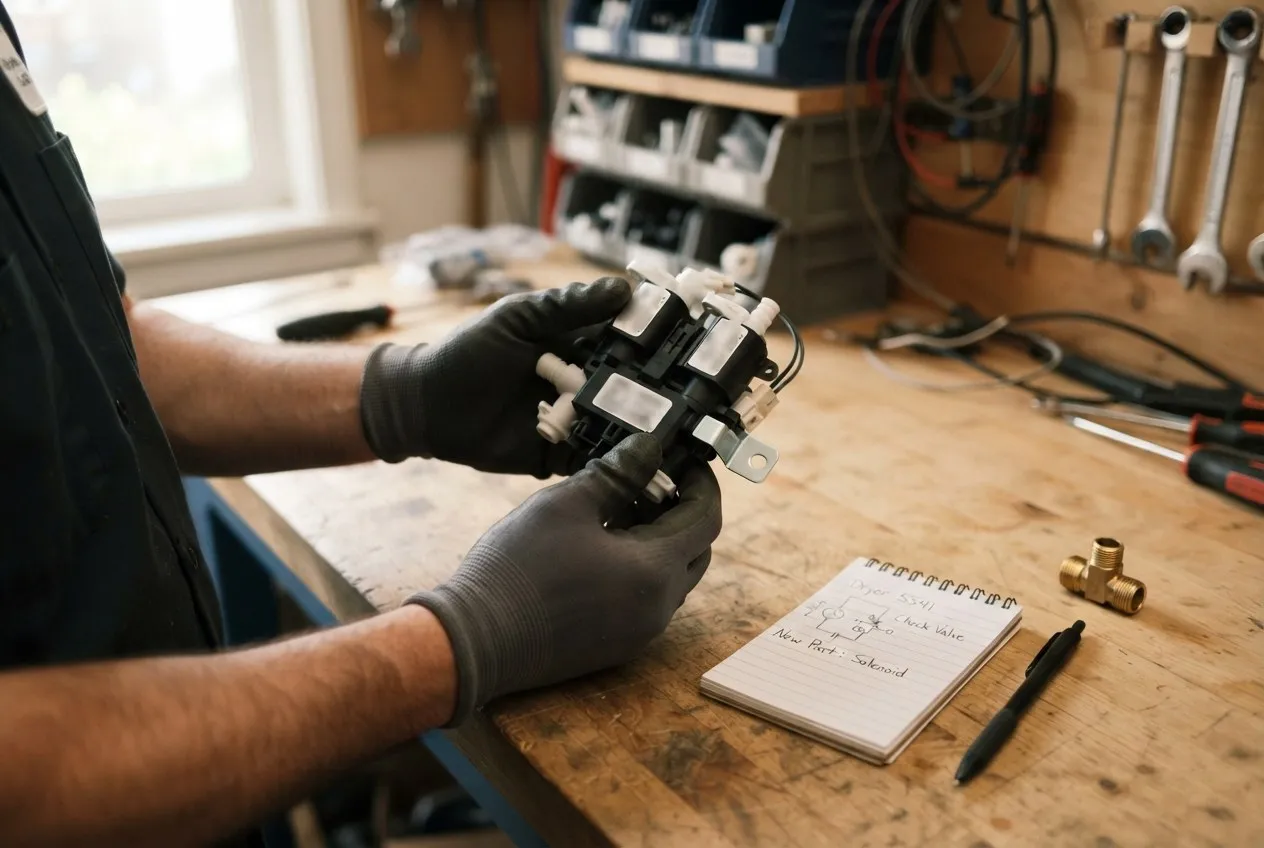
The failed part. Consumer Reports member data puts the median cost of fixing an ice maker, a fridge that isn’t cooling or a dispenser at roughly $150 to $240, while compressor repairs had a median of $562. That spread is the difference between a fan motor and a sealed-system job.
Gas versus electric. HomeGuide estimates gas appliance repairs cost 10% to 20% more than electric ones, because of higher part prices, higher safety risk and the need for a more experienced technician.
Brand and model. HomeGuide notes that high-end brands carry more expensive parts. In practice that shows up most on built-in refrigeration and pro-style ranges.
Access. Labor rises when the appliance is built in, stacked or squeezed into a tight space. A panel-ready dishwasher or a built-in refrigerator takes longer to pull, service and reset than a freestanding unit.
A second trip. If the part isn’t on the truck, you’ll usually wait for it to arrive, and some companies charge for the return visit. Ask before you approve the order.
Refrigerator repair cost: the fault sets the price
The refrigerator repair cost San Jose owners ask about most is for a fridge that has stopped cooling, and that symptom has a wide range of causes. A failed evaporator or condenser fan, a defrost problem or a control fault usually lands inside the national ranges above. A compressor or refrigerant leak is the expensive end, and it’s the point where the repair or replace decision becomes a real question. Consumer Reports says a refrigerator under about 10 years old is usually more economical to fix.
Premium built-ins cost more to fix, and more to replace
If your kitchen has built-in refrigeration or pro-style cooking from brands like Sub-Zero, Wolf and Thermador, the math shifts. None of the national cost publishers break out a reliable repair range for these brands, so this page doesn’t quote one. What the guides do agree on is direction: premium parts cost more and built-in access takes more labor.

The other side of the math matters as much. A built-in replacement has to fit an exact cabinet opening and often takes custom panels, so the “buy a new one” option is far more expensive than it is for a freestanding fridge. That’s why a large quote on a built-in is often still worth paying. If you own one, the Sub-Zero repair and Thermador repair pages cover the warranty terms to check before you pay for any repair.
Ways to keep the bill down
Some of the cost is in your hands before the technician arrives.
- Read the error code. If the display shows a code, look it up in the appliance error code library. Some codes clear with a reset or a cleaned filter, and that can save a service call entirely.
- Have the model and serial number ready. They’re on the rating plate, usually inside the door, on the frame or on the back. Giving them over the phone lets the company check part availability before the visit.
- Check your warranty and receipts. A part still under the manufacturer’s warranty can change who pays for it. HomeGuide notes that extended warranties usually cover parts but not labor.
- Clear the way. Empty the fridge or dishwasher and clear space around the washer and dryer so the technician isn’t billing time to move things.
- Ask about parts on newer models. California’s Right to Repair Act (SB 244) requires manufacturers of appliances with a wholesale price of $100 or more to make parts, tools and documentation available for at least seven years after a model was last manufactured. It covers products first made and sold in California on or after July 1, 2021, so a recent model shouldn’t be declared unrepairable only because a part is hard to find.
When you’re ready, call with the brand, the model number and what the appliance is doing, and we’ll connect you with a local repair company that handles it.