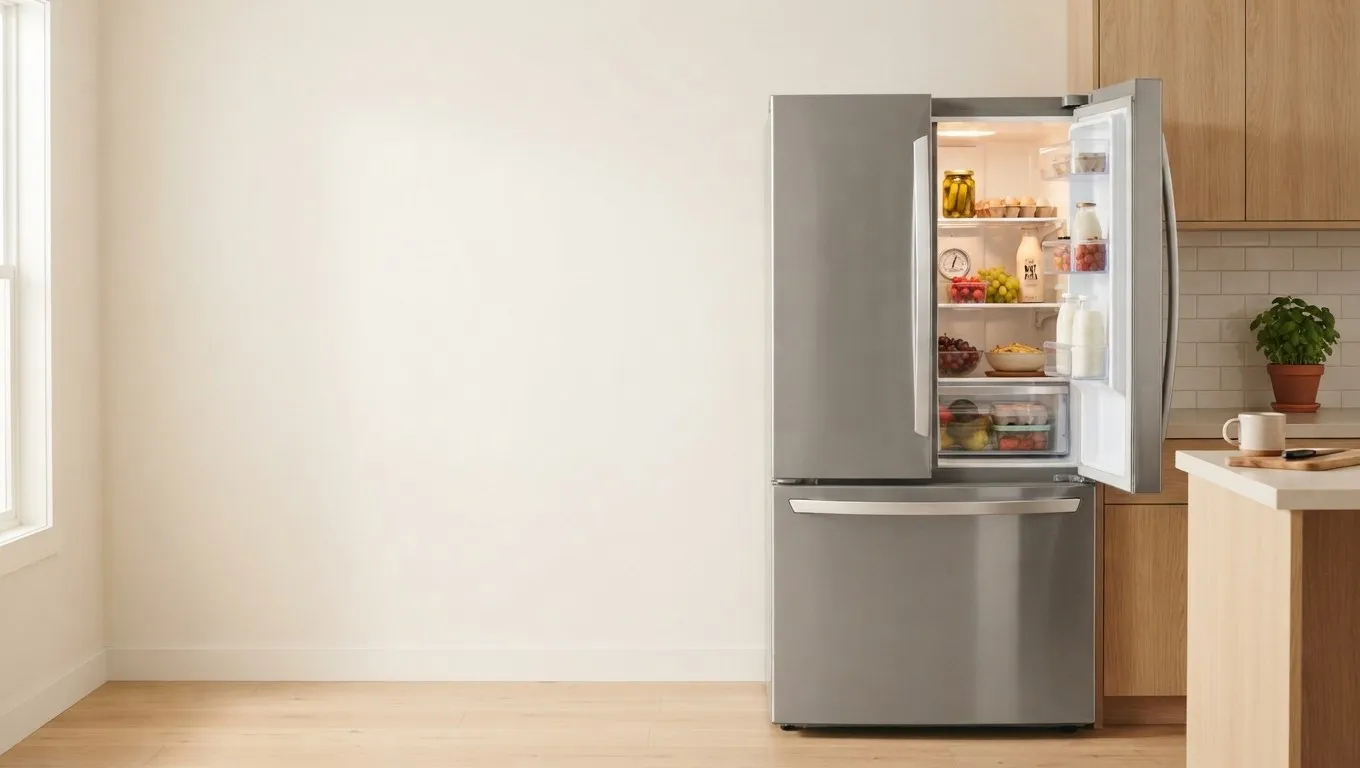
A refrigerator rarely dies all at once. It warms by a few degrees, grows a patch of frost, or leaves a puddle under the crisper drawers, and each of those signs points to a different part. San Jose Appliance Care connects homeowners with local companies for refrigerator repair in San Jose and the surrounding Santa Clara Valley, and for freezer repair too: French door, side-by-side, top- and bottom-freezer models, built-in columns, and the chest or upright freezer in the garage. Tell us the brand, the symptom and your ZIP code, and we’ll put you in touch with a company that works on that fridge.
This page starts where you are, with the symptom, then covers repair costs, the rules that apply to refrigerant work in California, and how to decide whether an older unit is worth fixing.
Match the symptom to the likely fault
A good technician diagnoses before quoting. Still, knowing what a symptom usually means helps you describe it clearly on the phone and judge whether the estimate makes sense.
Refrigerator not cooling but the freezer is
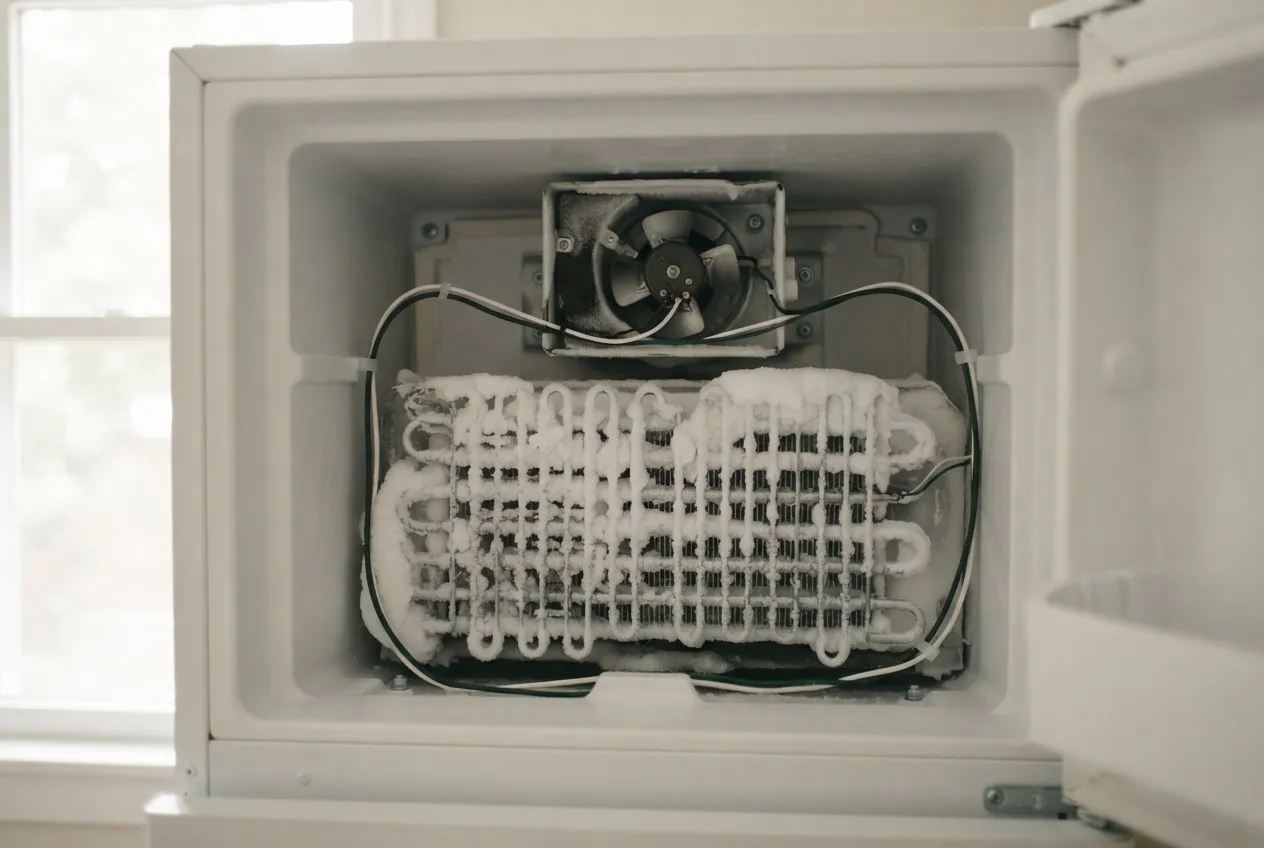
This is the most common refrigerator complaint, and it has a mechanical logic. In a frost-free refrigerator the cold is made in the freezer, at the evaporator coil, and a small fan blows part of that air through a duct into the fresh-food section. The freezer can stay at 0°F while the shelves below drift into the 50s if any link in that chain breaks.
The usual suspects:
- A frosted-over evaporator. GE explains that a defrost heater switches on every 8 to 15 hours on timed systems, for roughly 25 to 45 minutes, to melt frost off the coil. If the heater, its thermostat or the control fails, frost builds until air can’t pass. Whirlpool’s own service bulletin for this exact symptom (warm fridge, cold freezer) calls for replacing the control and fully defrosting the evaporator so the fault doesn’t come straight back.
- A stopped evaporator fan. If you can’t hear the fan behind the freezer’s back panel when the compressor runs, the cold air isn’t moving.
- A blocked air duct. Overpacked freezers can cover the vents that feed the fresh-food side. This one costs nothing to check.
A tip before the visit: a technician can’t see a frost problem if you’ve unplugged the fridge overnight and the ice has melted. If you can keep food cold another way, leave it running so the evidence is still there.
Both sections warm
When the whole cabinet is warm, the problem sits upstream of the fans. Dust-packed condenser coils, a failed condenser fan, a start relay that won’t let the compressor kick on, or a compressor or sealed-system fault are all candidates. Listen: a compressor that clicks on and off every few minutes without running is a different job from one that runs nonstop and never gets cold.
Frost on the back panel or ice in the drawers
Heavy frost on the freezer’s rear wall is a defrost-system sign; GE says heavy frost or ice build-up is a reason to call a technician. Ice sheets forming under the crisper drawers usually mean the defrost drain is frozen or clogged, so meltwater that should reach the drain pan refreezes inside the cabinet instead.
Water on the floor
Leaks come from a few places: a plugged defrost drain, a cracked drain pan, or the water line and inlet valve that feed the ice maker and dispenser. If the ice maker is the part acting up, our ice maker repair page covers that system on its own.
Freezer not freezing
A standalone chest or upright freezer has fewer parts than a combination refrigerator, so the list is shorter: door gasket, thermostat or control, condenser airflow, start components and the sealed system. A torn gasket is cheap to replace and easy to spot; close the lid on a strip of paper and see if it slides out without resistance.
Protect the food while you wait
The clock matters more than the repair bill in the first few hours. The USDA’s food safety guidance gives firm numbers:
- Keep the refrigerator at 40°F or below and the freezer at 0°F or below. An inexpensive appliance thermometer tells you where you stand.
- A closed refrigerator keeps food safe for about 4 hours.
- A full freezer holds its temperature for about 48 hours; a half-full one, about 24 hours.
- Perishables that sit above 40°F for more than 2 hours should go. Frozen food that still has ice crystals, or reads 40°F or below, can be refrozen, though quality may drop.
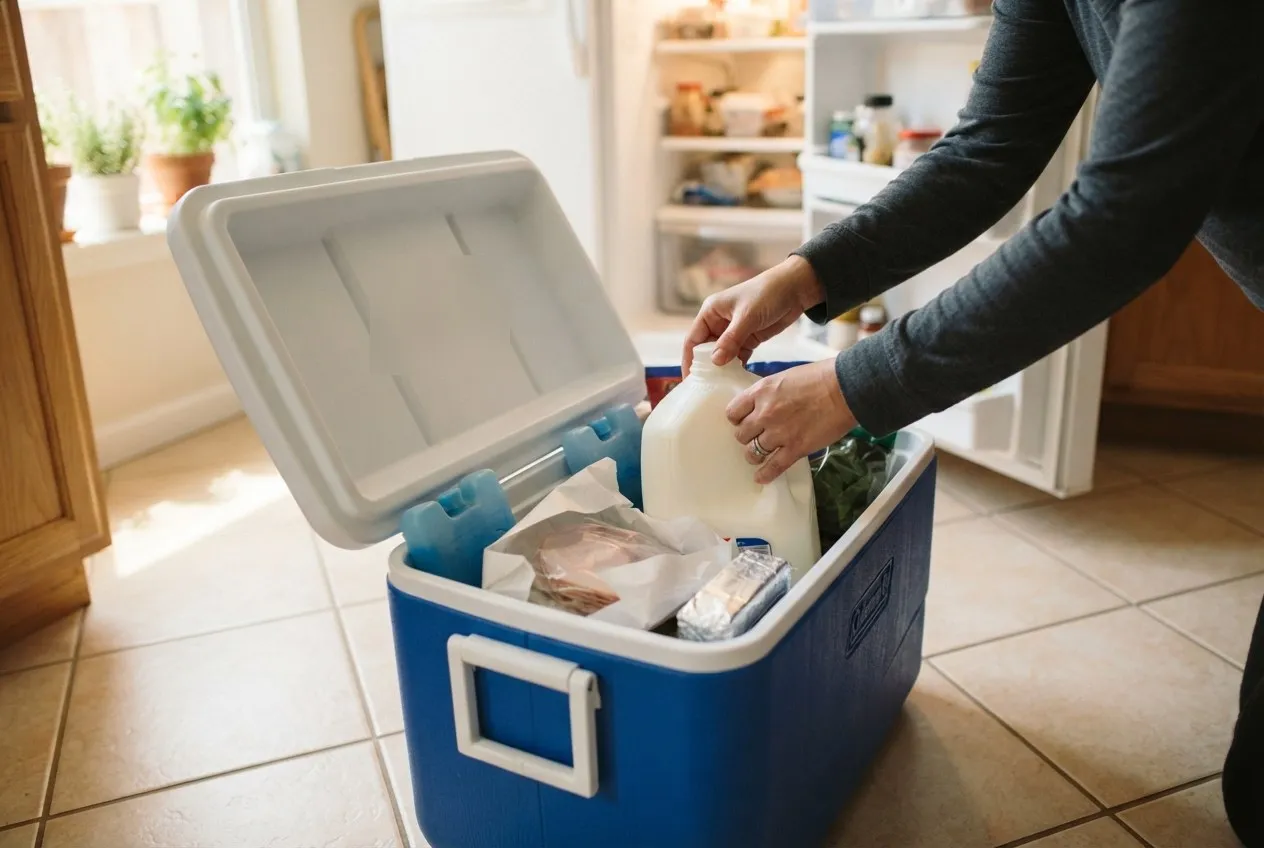
Move the milk, meat and leftovers to a cooler with ice if the repair won’t happen today. Never taste food to decide whether it’s safe.
Garage refrigerators in the Santa Clara Valley
A second fridge or chest freezer in the garage is common, and when one “can’t keep up,” the cause can be where it stands rather than a broken part.
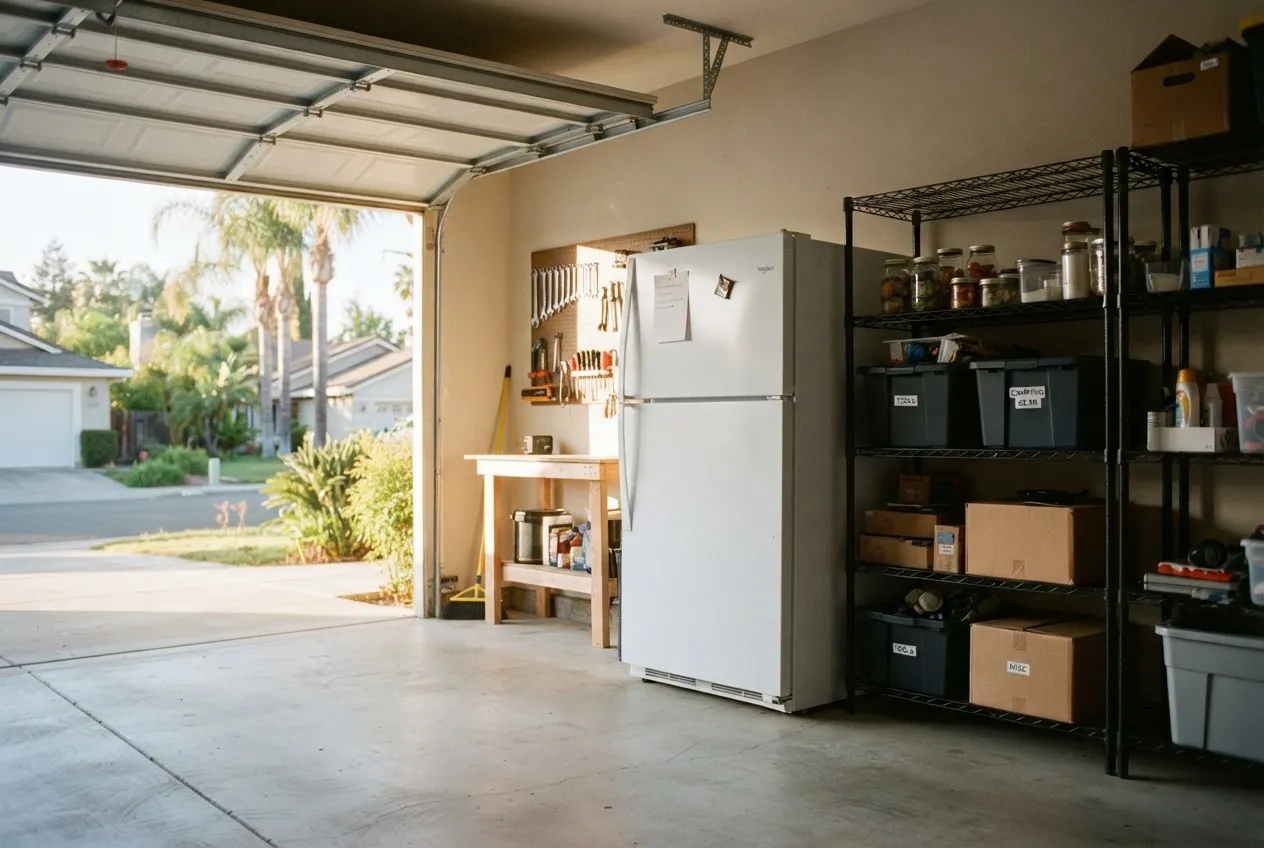
Whirlpool designs its standard refrigerators for rooms between 55°F and 110°F and says garages sit outside the recommended range unless they’re insulated and climate-controlled. On a hot afternoon the compressor runs almost constantly trying to hold temperature. On a cold night, low room temperature can change how the compressor cycles, and the freezer may partly thaw even though nothing is broken. GE’s garage-ready top-freezer models are tested for 38°F to 110°F, which is why they cope where a kitchen model struggles.
Two practical checks before you book a visit for a garage unit:
- Give it room to breathe. Whirlpool calls for at least a quarter inch of space on each side and on top, and a condenser buried behind storage boxes can’t shed heat.
- Note when the problem shows up. A fridge that only struggles during a hot spell, and recovers overnight, may need a better spot rather than a part.
What refrigerator repair costs
Prices below are national figures from Fixr, not San Jose quotes. Local rates, the brand and whether the unit is built in all move the number, so treat them as a way to sanity-check an estimate. The appliance repair cost guide covers every appliance side by side.
| Repair or problem | National range |
|---|---|
| Condenser coil service | $60-$100 |
| Evaporator or fan repair | $120-$200 |
| Temperature problems (too warm or too cold) | $50-$250 |
| Leaking water | $60-$250 |
| Refrigerant (Freon) leak | $200-$300 |
| Compressor | $500-$1,000 |
| Control board | $500-$1,000 |
| Sealed system repair | $800-$1,200 |
Fixr puts the national average near $400, with most repairs landing between $350 and $500, service calls around $70-$120 applied to the first hour, and technician time at $100-$250 an hour.
Ask whether the diagnostic fee is credited toward the repair if you go ahead. Under California’s repair dealer law, the company has to tell you that fee in writing before the in-home repair, and it has to give you a written estimate for parts and labor before any work starts. It can’t charge more than that estimate without your consent.
Sealed-system work and California rules
The sealed system is the closed loop of compressor, condenser, evaporator and refrigerant. Opening it is regulated in two ways, and both are worth knowing before you approve that kind of repair.
Federal certification. The US EPA requires anyone who opens a refrigerant circuit during service, or could reasonably be expected to release refrigerant, to hold Section 608 technician certification. Ask whether the technician holds it; a certified tech won’t mind the question.
California’s piercing-valve rule. Some technicians enter a refrigerant line with a clamp-on piercing valve to test or add refrigerant. California regulations (16 CCR section 2741) say the dealer then has to replace that clamp-on valve with a permanent solder-in valve or seal the entry point, unless it told you in writing that the clamp-on valve is only a temporary repair and you agreed. If your estimate mentions “adding refrigerant,” ask how the line will be closed afterward.
The same law lets you ask for the old parts back, except parts the dealer returns to the manufacturer under a warranty arrangement.
Brands and refrigerator types covered
The San Jose area has a lot of built-in refrigeration: Sub-Zero columns and over-and-under units, Thermador and Miele panel-ready columns, Viking built-ins. Those need a technician who has worked inside that brand’s sealed system and control boards, so say which model you have when you call. Brand guides are available for Sub-Zero refrigerator repair and for Samsung and LG French door models, including their warranty terms.
Freestanding refrigerators from Whirlpool, GE, KitchenAid, Frigidaire, Bosch and Fisher & Paykel are covered too, along with compact units, wine refrigerators paired with a kitchen suite, and standalone freezers. If the display is showing a code, write it down; the appliance error code library lists manufacturer meanings for the common ones.
Refrigerator repair in Sunnyvale and nearby cities
The service area covers San Jose, Santa Clara, Milpitas, Cupertino and Los Gatos in Santa Clara County, plus Fremont across the county line in Alameda County. If you’re after refrigerator repair in Sunnyvale, the Sunnyvale appliance repair page covers the city’s ZIP codes and local details, and Mountain View and Palo Alto have their own pages under areas served. Give your ZIP code when you call so you’re connected with a company that covers your address.
Repair it or replace it
Fixr puts the average refrigerator life at about 13 years, and a common rule of thumb is to replace once a single repair costs more than half the price of a comparable new model. A fan motor, defrost heater or water valve on a seven-year-old French door fridge usually passes that test. A compressor on a fifteen-year-old top-freezer usually doesn’t. Built-in units are the exception people forget: replacing one means matching a cabinet opening and custom panels, which adds cost and tilts the math toward repair. The repair or replace guide walks through the math by appliance.
If you do retire an old unit, it can’t simply be crushed. California requires a certified appliance recycler to remove refrigerants, mercury switches and other materials that need special handling first, according to the state’s Department of Toxic Substances Control. The City of San José lets residents of single-family homes and mobile home parks schedule free curbside junk pickup through their recycling hauler, and refrigerators are on the accepted list; apartment residents go through their property manager.
When you’re ready, call with the brand, the model number from the label inside the door and your ZIP code, and we’ll connect you with a local company that works on it.