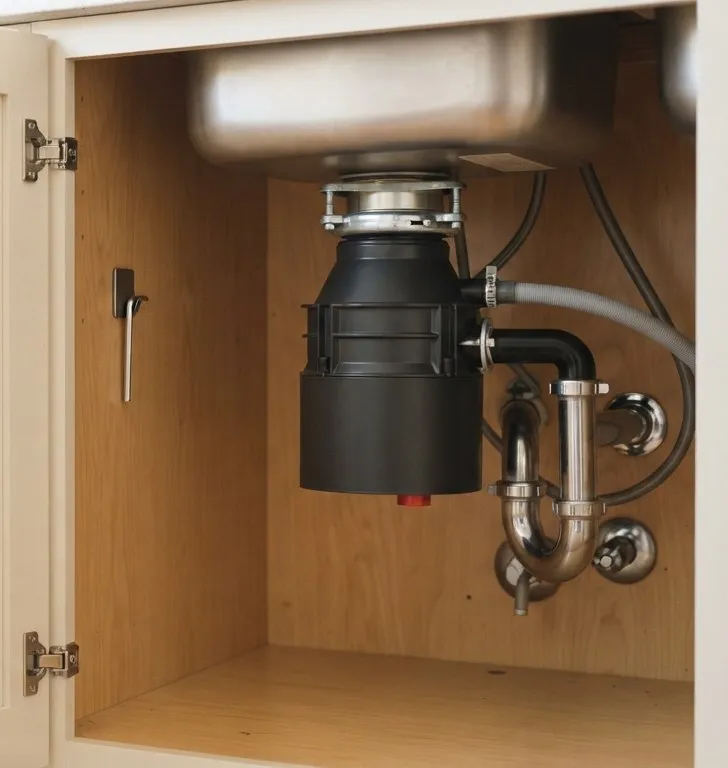
A garbage disposal sits right where appliance repair and plumbing meet. The motor, the reset switch and the grinding chamber are appliance territory; the sink flange, the drain line and the trap are plumbing. San Jose Appliance Care connects homeowners with local companies for garbage disposal repair in San Jose, from a humming jam or a unit that won’t start to a leak under the sink or a full replacement. To be straight about it: some of these jobs are handled by appliance repair companies and some are more often done by plumbers, and this page explains which is which so you call for the right help. It also walks through the checks InSinkErator recommends before anyone comes out.
Humming, silent or tripping: clear the jam first
A disposal that hums but doesn’t grind is typically jammed. Something hard, like a fruit pit, a bone or a bottle cap, has wedged between the spinning plate and the grind ring, so the motor gets power but can’t turn. A disposal that’s completely silent has usually tripped its overload protector. Both have the same fix, in this order:
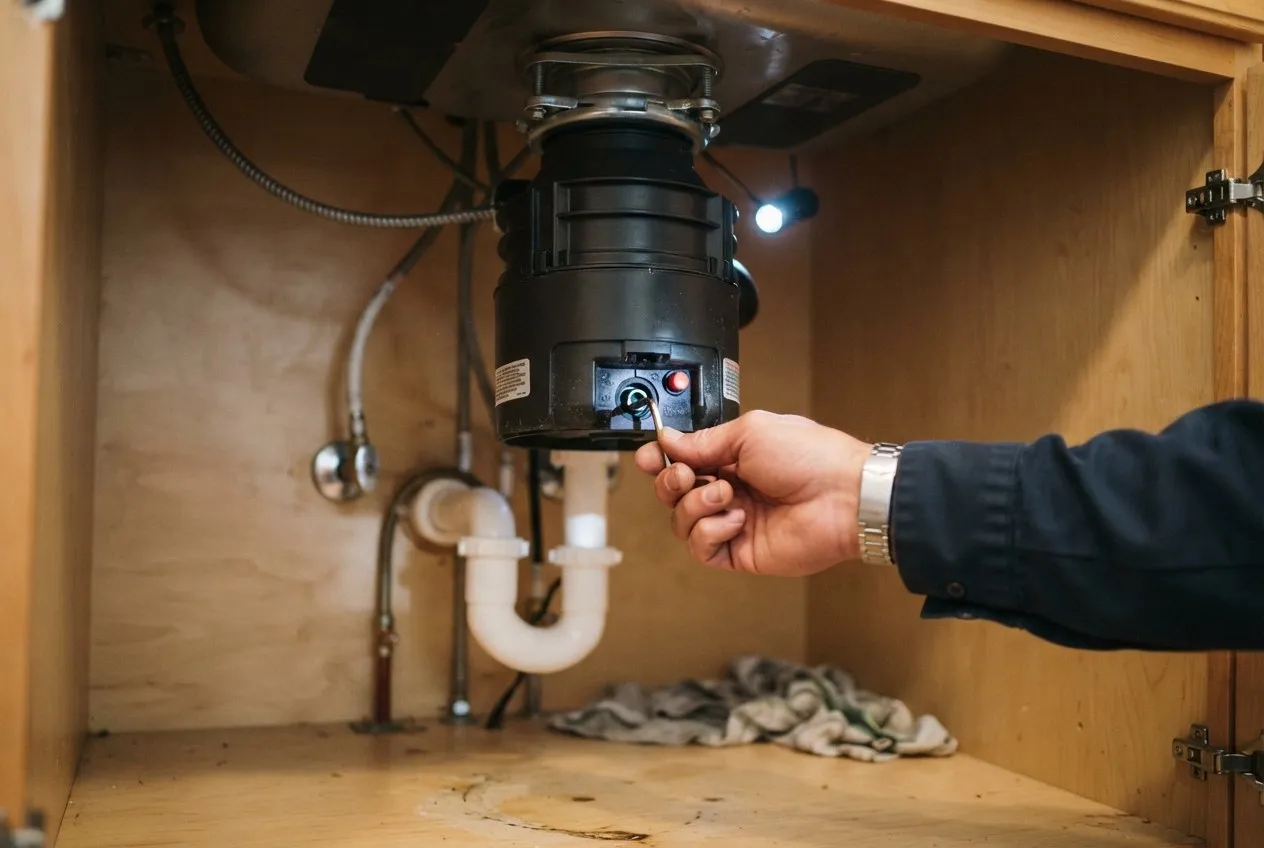
- Turn the disposal switch off, and cut power at the breaker or unplug the unit if you can reach the plug. InSinkErator’s instruction is plain: never put your hand in the disposal.
- Look underneath for the hex socket in the center of the bottom. InSinkErator sells a Jam-Buster wrench for this; you insert it into the center hole and turn it back and forth until the jam frees up. The wrench fits InSinkErator-made disposals only.
- Once the plate turns freely, remove whatever caused the jam from the chamber with tongs or pliers, not your fingers.
- Find the reset button. On InSinkErator units it’s a red square button on the bottom, facing the floor. When it has tripped, it sits about a quarter inch (5 mm) lower than usual. Press it gently.
- If the button won’t stay in, the motor is still hot. InSinkErator says to wait ten minutes and try again. For its EZ Connect models, it says to leave the unit off (and unplugged, if it runs from an air switch) for up to 20 minutes.
- Run water, switch the disposal on, and listen.
If the hex socket won’t turn at all, or the disposal trips again as soon as it starts, the motor or bearings may be seized. That’s the point to call. HomeGuide puts a professional jam repair at $75 to $175 and says it usually takes 45 to 60 minutes.
No hum, no click, nothing
A disposal that makes no sound at all, even after the reset button has been pressed, has lost power somewhere between the panel and the motor. Check the breaker first, then the wall switch or air switch, then whether the unit is plugged in under the sink. HomeGuide puts the cost of fixing a disposal that won’t turn on at anywhere from $70 to $550, depending on the cause. The cheap end is a switch replacement or a loose connection; the expensive end is a new outlet, a new motor, or a whole new unit. That spread is why a diagnosis comes before any quote.
If the unit is hardwired and you aren’t comfortable at the breaker panel, stop there and call. HomeGuide also notes that after-hours visits on weekends and holidays carry minimum fees of $140 to $400, so a disposal that’s only inconvenient can often wait for a weekday appointment.
For a slow-draining sink rather than a jam, InSinkErator’s clog steps are different: clean the underside of the splash baffle, run warm water with a quarter cup of baking soda through the unit, and use a plunger with about four inches of water in the sink if it’s still slow.
Read the leak by where it drips
Before you decide anything, find the source. Clear out the cabinet, lay newspaper on the cabinet floor, run water and watch where the drips land. InSinkErator groups disposal leaks by location, and each one points to a different fix:
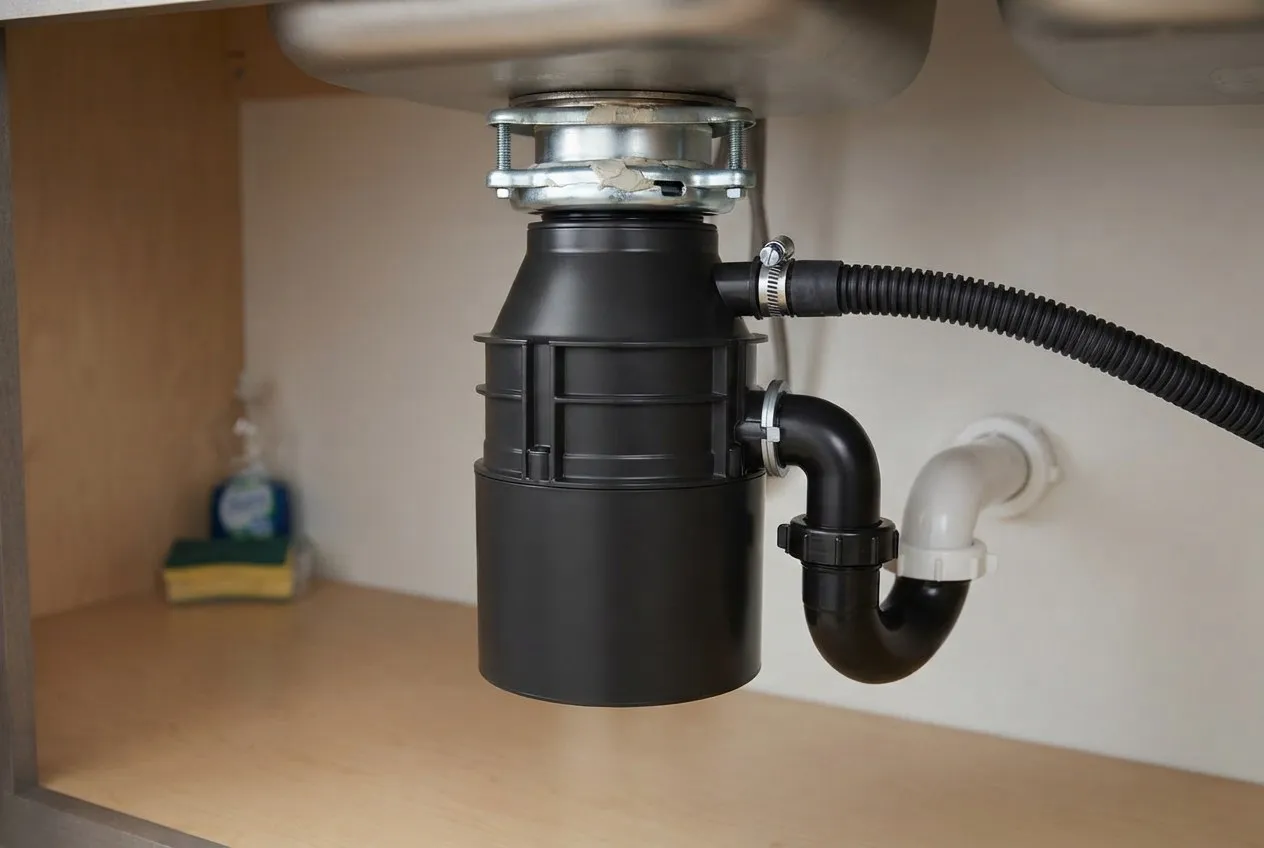
- At the top, around the sink flange. The mounting assembly or the flange seal is leaking. On newer installs this can be excess or failed plumber’s putty; the flange may need tightening or resealing. This is a mounting job, not a disposal failure.
- At the side, from the discharge pipe. The drain connection is loose or its gasket is worn. Usually a tightening or gasket replacement.
- At the dishwasher inlet. The hose clamp, adapter or the joint at the trap. On a new disposal, InSinkErator’s first check here is whether the knockout plug was removed.
- From the bottom of the housing. Make sure it isn’t water running down from above. If it truly comes from the body of the disposal, HomeGuide notes that older units leaking through a cracked casing are more cost-effective to replace than repair.
HomeGuide puts a typical leak repair at $80 to $180, most often a new seal or a flange fix.
Appliance repair company or plumber?
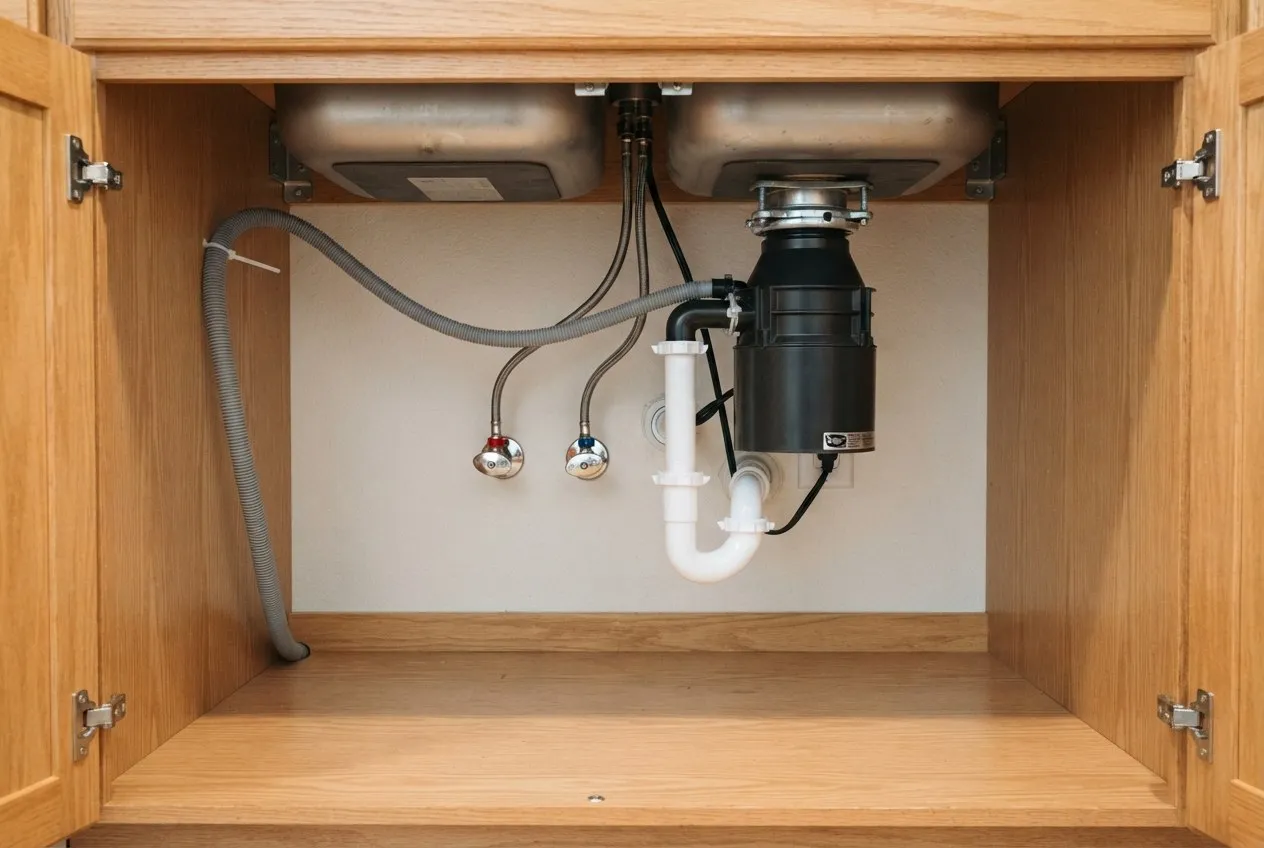
Here’s the honest version. California’s appliance repair law (Business and Professions Code section 9801) lists major home appliances such as refrigerators, ranges, dishwashers and ice makers by name. Garbage disposals aren’t on that list, although it isn’t exhaustive. Most of the companies that show up when you search for disposal repair in San Jose are plumbing companies, because the job so often involves the sink drain and the trap. Some appliance repair companies also take disposal calls, especially for diagnosis and motor or electrical faults.
How to decide:
- Jam, reset, won’t start, electrical question: either kind of company can help.
- Leak at the flange, drain or trap: plumbing work.
- Full replacement: often a plumber, sometimes with an electrician if a new outlet or wiring is needed. HomeGuide lists a new outlet at $80 to $200 and a GFCI outlet at $150 to $350 when those come up.
California also sets a licensing line. The Contractors State License Board says that since January 1, 2025, an unlicensed person may take on minor work only under $1,000, only if the job needs no permit of any kind, and only if they don’t employ anyone to help. Anything over $1,000, or anything requiring a permit, calls for a licensed contractor. For a disposal swap, ask whoever you hire whether they hold a license and whether the work needs a permit.
When you call San Jose Appliance Care, describe the symptom and whether you want a repair or a replacement. We’ll connect you with a local company that takes that kind of disposal job.
Repair or replace the disposal?
HomeGuide says a garbage disposal lasts 8 to 12 years on average, depending on the brand, size and how hard it’s used. Its national costs set up the decision:
| Job | National typical cost |
|---|---|
| Most disposal repairs | $100 to $250 |
| Clearing a jam | $75 to $175 |
| Unclogging | $70 to $200 |
| Leak repair (seal or flange) | $80 to $180 |
| Won’t turn on, depending on cause | $70 to $550 |
| Replacement, unit plus labor | $200 to $550 |
| New unit alone | $100 to $300 |
Because a replacement can cost only a little more than a larger repair, age matters more here than with most appliances. A jam or a loose flange on a four-year-old disposal is worth fixing. A bottom leak or a seized motor on a unit past its eighth year usually points to replacement. HomeGuide also notes a minimum diagnostic fee of $70 to $130 at many companies, often applied to the repair if you go ahead, so ask about that on the call. For other kitchen appliances, see the repair or replace guide and the appliance repair cost guide.
What the City of San José asks you to keep out of the drain
Many disposal jams and slow drains come from what goes into them. The City of San José’s Environmental Services guidance asks residents not to grind fibrous foods such as corn husks and cobs, onion peels, artichoke leaves, banana peels and celery, or greasy foods such as meat. Fats, oils and grease poured down the drain can build up in sewer lines and cause blockages and sewage overflows. The city’s advice is to let cooking grease cool, put up to a quart in a covered container in the trash, and use the county’s Household Hazardous Waste program for larger amounts.
That’s useful beyond the disposal itself. Grease that gets past the grinder can clog your own drain line, which turns a disposal problem into a plumbing one.
The dishwasher connection
Most disposals share a drain with the dishwasher, so a problem in one often shows up in the other. If a dishwasher stops draining right after a new disposal goes in, the knockout plug is the first suspect: InSinkErator ships new units with a small plug sealing the dishwasher inlet, and it has to be knocked out before the drain hose is attached. If the disposal is fine and the dishwasher still won’t drain, the problem is likely in the dishwasher itself, which the dishwasher repair page covers.
We connect callers across San Jose and nearby cities such as Milpitas, Sunnyvale and Fremont. Tell us what the disposal is doing, whether it’s leaking, and whether a dishwasher drains into it.