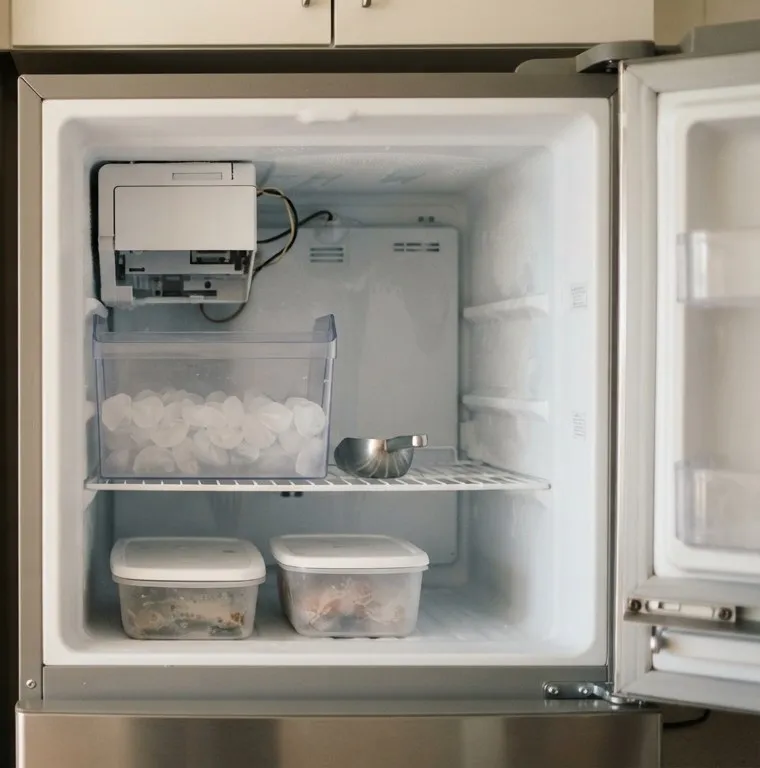
San Jose Appliance Care connects homeowners with local repair companies for ice maker repair in San Jose and nearby cities, from the ice maker inside a French-door or side-by-side refrigerator to the separate icemaker in a built-in column or an undercounter unit. An ice maker is a small machine with a narrow job: take in water through the inlet valve, freeze it in a mold, harvest the cubes and stop when the bin is full. When any link in that chain fails (the water supply, the filter, the freezer temperature or the ice maker assembly), the bin stays empty. Some of those links you can check yourself in a few minutes, and San Jose’s water supply adds a local reason the inlet valve wears out.
Check these five things before you book a visit
A surprising share of “broken” ice makers are switched off, starved of water, or sitting in a freezer that’s too warm. Whirlpool’s troubleshooting guide covers most of these, and they apply to other brands too.
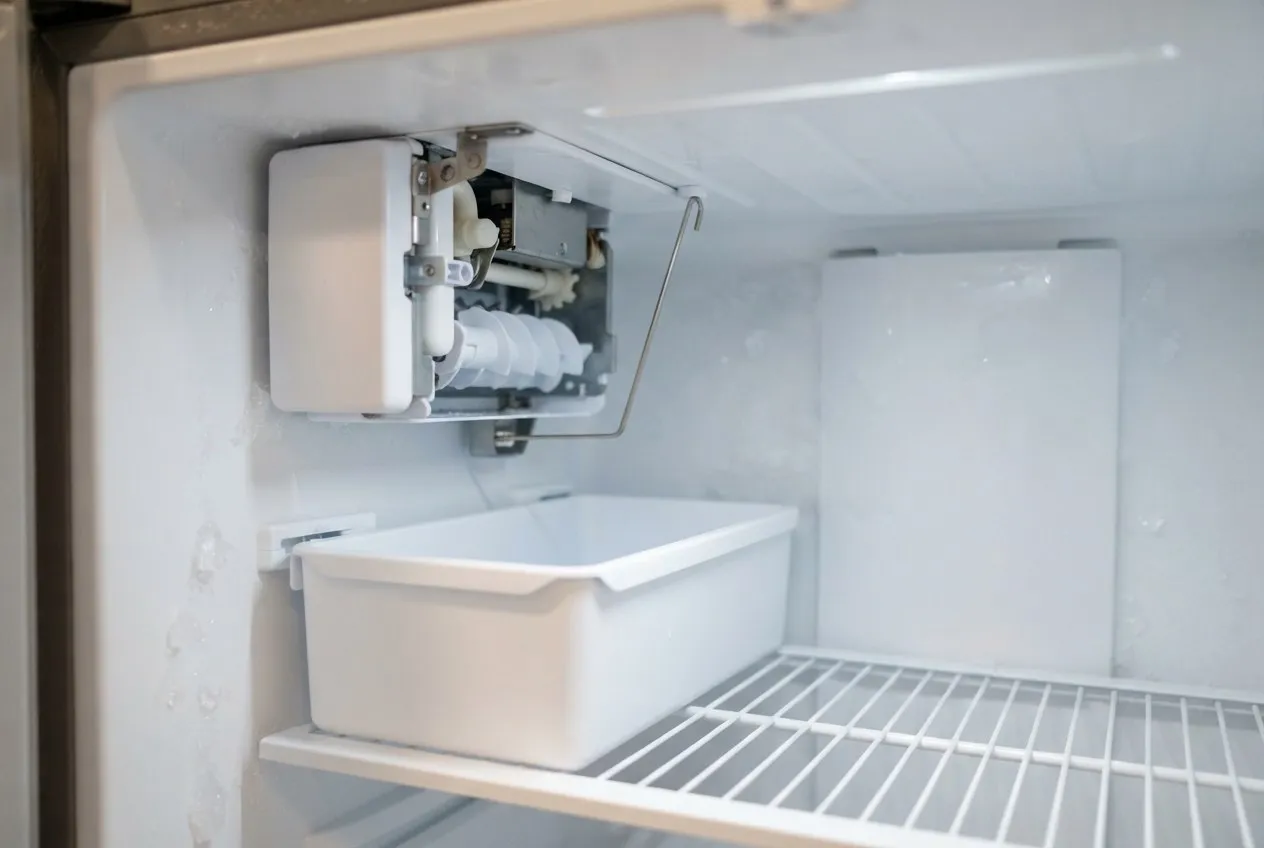
- The switch or arm. Many ice makers have an on/off switch or a wire arm that stops production when it’s raised. Make sure it’s on and the arm is down. Some models also have a reset button; Whirlpool says to press and hold it for a few seconds (your manual shows where it is).
- The freezer temperature. Whirlpool wants the freezer between 0 and 5°F for good ice production. If you change the setting, give it a day to settle before judging the result.
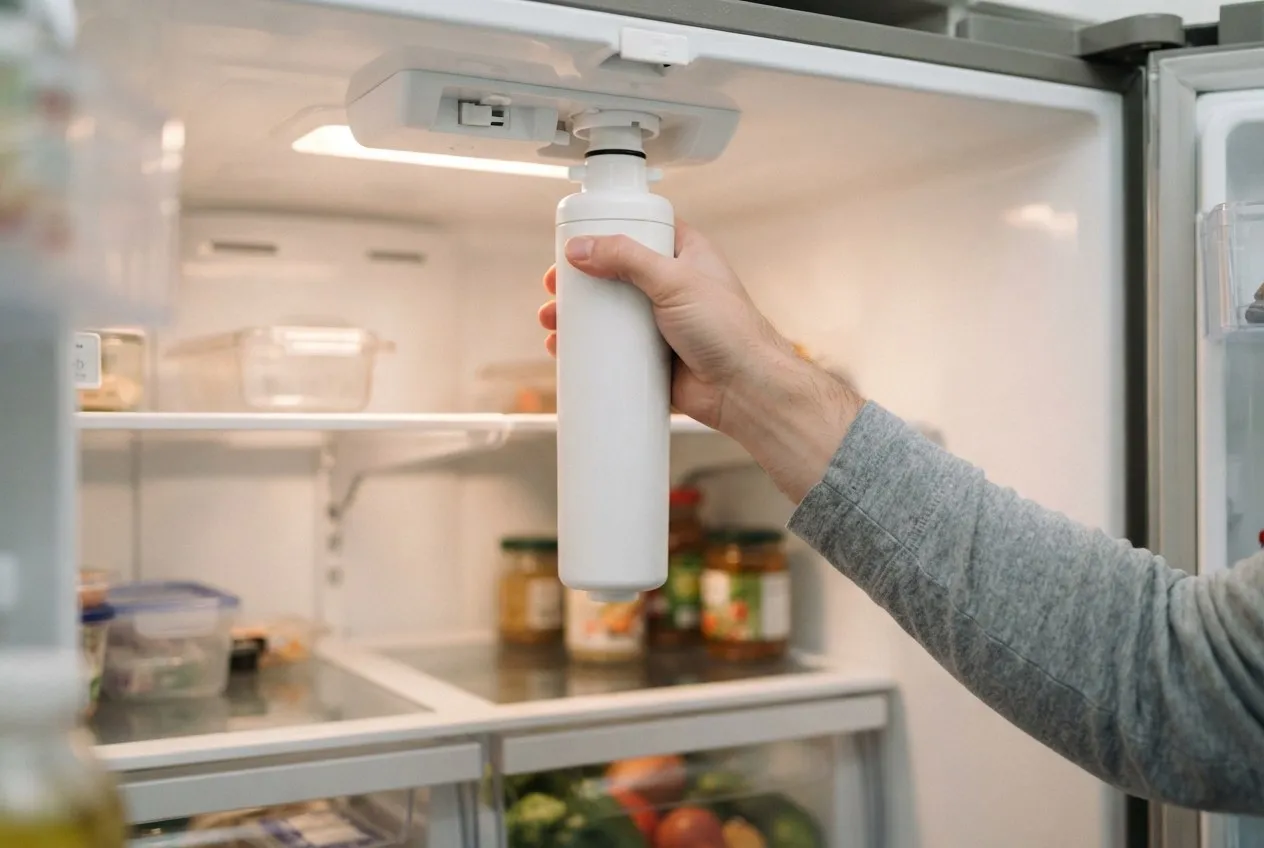
- The water filter. Whirlpool recommends a new filter every six months or when the indicator comes on. A clogged or badly seated filter can slow or stop water flow to the ice maker.
- The supply line and valve. The shutoff valve feeding the refrigerator should be fully open, and the line shouldn’t be pinched. Whirlpool warns that pushing a fridge too far back can crush the tubing.
- A simple reset. Whirlpool’s suggestion is to unplug the refrigerator for one minute, plug it back in, and check again after a couple of hours.
If all five check out and there’s still no ice, the fault is almost certainly a part, and it’s time for a technician.
Why San Jose’s water matters to an ice maker
San Jose Water publishes its hardness figures by source. It treats anything above 7 grains per gallon (120 parts per million) as hard water, and its three supply sources vary widely:
| Supply source | Hardness (ppm) | Grains per gallon |
|---|---|---|
| Groundwater | 183 to 440 | 11 to 26 |
| Imported surface water | 77 to 153 | 4 to 9 |
| Mountain surface water | 84 to 198 | 5 to 12 |
The utility notes that these calcium and magnesium minerals can leave scale in kettles and spots on dishes. The same minerals pass through a refrigerator’s water inlet valve every time the ice maker fills. HomeGuide notes that this valve clogs without regular cleaning when the supply carries heavy mineral deposits. In practice, that means two things for a San Jose kitchen: change the refrigerator filter on schedule, and if the valve has been replaced before, mention it on the call, because a repeat clog suggests the water is part of the story.
If your water comes from a different supplier, its annual water quality report lists the hardness for your address.
What each symptom usually means
| What you see | Likely cause | First move |
|---|---|---|
| No ice at all, dispenser water fine | Ice maker switched off, assembly or its valve side failed | Check the switch or arm, then book a diagnosis |
| No ice and no dispenser water | Closed supply valve, kinked line, clogged filter, failed inlet valve | Check valve, line and filter |
| Small, hollow or misshapen cubes | Low water pressure | See the pressure section below |
| Ice clumped or frozen into a block | Freezer too warm, or the door isn’t sealing | Check temperature and gasket |
| Water dripping or ice forming near the fill tube | Frozen fill tube or leaking inlet valve | Book a technician |
| Ice maker buzzing with no water connected | Ice maker left on without a supply | Turn it off until the line is hooked up |
That last one is worth a note. Whirlpool says an ice maker powered on without a water connection can make a buzzing noise and may leave the refrigerator running too cold. If you’ve never connected the line, switch the ice maker off.
Water pressure, filters and reverse osmosis
Pressure is easy to overlook. Whirlpool’s installation instructions call for a cold water supply of 30 to 120 psi, and its support pages say most of its refrigerators perform best between 40 and 80 psi. Below that, the symptoms are predictable: slow fills, smaller or hollow cubes, and slow or no production.
Reverse osmosis systems are a common culprit in homes that filter drinking water under the sink. Whirlpool says RO systems can further reduce pressure and that the pressure reaching the fridge’s inlet valve should be 40 to 60 psi. It also suggests removing or bypassing the fridge’s own filter when an RO system is already treating the water. GE Appliances adds its own conditions for connecting RO water to an icemaker: the RO system needs at least 40 psi to work properly, an extra storage tank is required, and copper tubing shouldn’t be used between the RO unit and the refrigerator. GE also notes that RO cubes may come out slightly smaller and clearer than tap-water ice.
If the ice maker slowed down soon after an RO system went in, that timing is a strong clue. Whirlpool’s advice is that a licensed plumber can test household water pressure if you’re unsure.
Refrigerator ice makers and built-in units
Most calls involve the ice maker inside a refrigerator’s freezer or, on many French-door models, a separate ice compartment in the fresh-food section. Those are covered under general refrigerator and freezer repair when the fridge itself is also misbehaving, for example when the freezer won’t hold temperature and the ice maker stops as a side effect.
Built-in columns and integrated refrigerators use ice makers designed around the brand’s own parts. If yours is a Sub-Zero or another built-in brand, whether in San Jose, Palo Alto or Los Gatos, say so on the call so you’re matched with a company that services that line. On French-door models from Samsung, LG and others that keep the ice compartment in the fresh-food side, mention whether any ice is forming in the compartment at all.
What ice maker repair costs
HomeGuide’s national figures give a sense of scale:
- Ice maker repair: $100 to $225 on average
- Water inlet valve replacement: $100 to $225
- Ice maker motor replacement: $225 to $400
- Full ice maker replacement in a refrigerator: $250 to $600 installed
- Replacement water line for the ice maker: $100 to $200
- Labor: $50 to $125 an hour, with call-out fees of $70 to $130 that include the first hour
HomeGuide lists brand examples too: $320 to $580 to replace the ice maker in a Samsung refrigerator and $275 to $500 in a Whirlpool. These are national averages; your written estimate is what counts. Our cost guide compares these numbers with other appliance repairs.
Standalone and undercounter ice machines
Not every ice maker lives in a refrigerator. Freestanding and undercounter ice machines make ice in larger batches and have their own water line, drain and cleaning needs. HomeGuide prices freestanding units at $200 to $1,500 and says ice machines need cleaning every 4 to 6 months. A professional cleaning service runs $100 to $200 and typically covers replacing filters, removing scale, sanitizing the internal parts and an inspection. Given the hardness figures above, it’s worth knowing when the machine was last descaled before you pay for a replacement part.
When you call about a standalone machine, say whether it’s freestanding or built under the counter, and whether it has a drain pump. Those details help match you with a company that services that type.
When a new ice maker makes more sense than a repair
HomeGuide says a refrigerator ice maker lasts 3 to 5 years on average, or up to 10 years on high-end brands, and that good-quality units can last as long as the refrigerator with regular maintenance and well-filtered water. Its guidance is to repair when the ice maker is under five years old, under warranty, or the parts are affordable, and to replace the assembly when the repair would cost more than a new one.
So the choice is usually between fixing a part and swapping the ice maker assembly, not between repair and a new refrigerator. If the fridge is also old and failing in other ways, our repair or replace guide covers that bigger decision.
When you call San Jose Appliance Care, tell us the brand and model, whether water still comes from the door, and whether you’ve changed the filter recently. We’ll connect you with a local company that fixes ice makers on that brand, and you can ask them about the diagnostic fee before they come out.