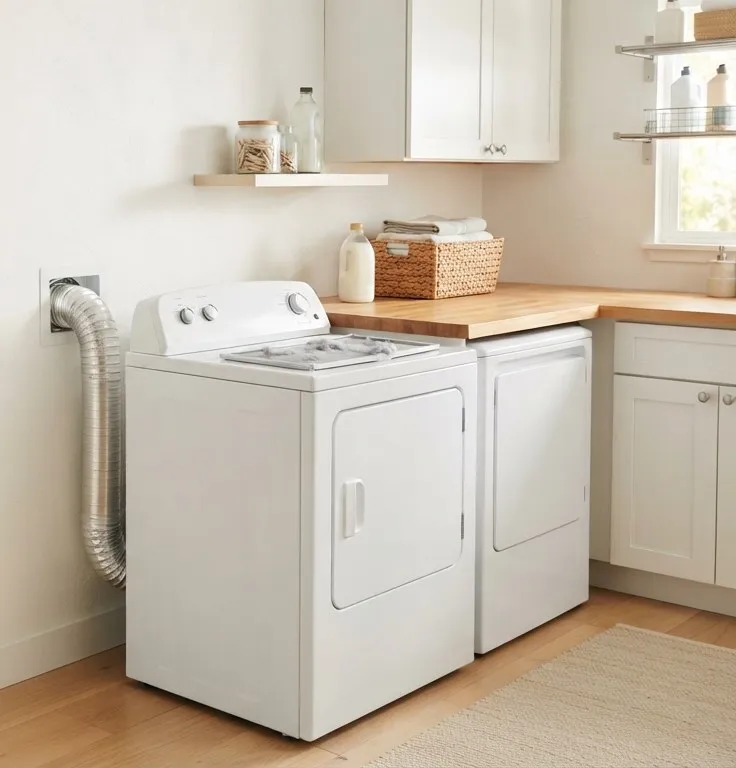
Dryer repair in San Jose covers two machines that look alike and work differently: electric dryers that heat with a coil on a 240-volt circuit, and gas dryers that light a burner off a household gas line. San Jose Appliance Care connects homeowners and renters across San Jose, Sunnyvale, Santa Clara and neighboring cities with local companies that repair both, whether the dryer won’t heat, won’t tumble, won’t start or takes three cycles to dry a load of towels. Start with the vent, though. It’s the cheapest fix, and it’s a fire-safety issue.
Long dry times usually start at the vent
If towels come out damp after a normal cycle, suspect airflow before you suspect a part. The CPSC lists damp clothes at the end of a typical cycle, or drying that takes longer than normal, as a sign that the lint screen or exhaust duct is blocked.
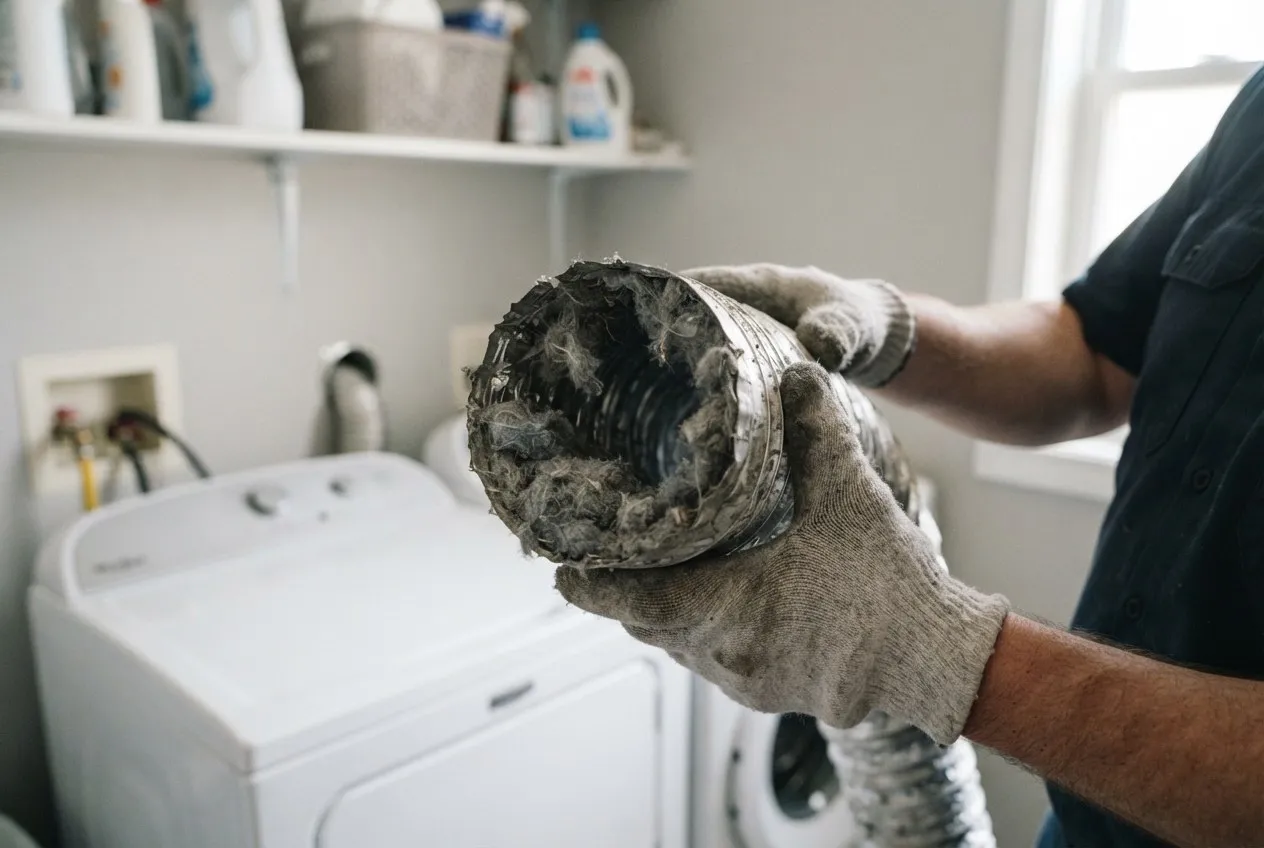
That matters beyond the electric bill. The US Fire Administration’s report on residential dryer fires found that failure to clean was the leading factor in ignition, at 34 percent, and that dust, fiber and lint were the item first ignited in 28 percent of cases. It estimated about 2,900 residential dryer fires a year, causing roughly 5 deaths, 100 injuries and $35 million in property loss. Dryer fires peaked in January.
What the safety agencies recommend:
- Clean the lint screen every load, before or after. NFPA adds: never run the dryer without the lint filter in place.
- Clean the vent pipe once a year, or more often if drying slows down, according to NFPA. You can do it yourself or hire a dryer vent cleaning service.
- Check the outside flap while the dryer runs. The CPSC says air should be coming out; if it isn’t, the vent or duct is blocked.
- Replace plastic or foil accordion duct with rigid or corrugated semi-rigid metal. The CPSC notes the flexible foil and plastic kinds trap lint and crush easily.
- Clear the space around and behind the dryer, where lint collects, and have the inside of the cabinet cleaned periodically by a qualified service person.
- Turn the dryer off when you leave home or go to bed, as NFPA advises.
Where the dryer sits changes how much vent you have to maintain. An earlier USFA report on dryer fires noted that newer home designs put laundry away from outside walls, in bedrooms, second-floor hallways, bathrooms and kitchens. A dryer in an upstairs closet can push its exhaust through a long duct with several turns before it reaches the outside, and every turn is somewhere lint can settle. If your laundry is in the interior of the house, the once-a-year cleaning matters more, not less.
One more fire risk comes from what goes in the drum. The CPSC warns that clothes stained with gasoline, cooking oil, cleaning agents, or wood finishing oils and stains can ignite. Wash those items more than once, hang them to dry if you can, and if you must use the dryer, pick the lowest heat and a cycle with a cool-down at the end. Don’t leave them piled warm in the drum or a basket afterward.
There’s a repair angle too. The CPSC found that when lint isn’t cleared, temperatures inside the drum and cabinet stay above normal, and that heat wears out wiring, connectors and the motor early. A dryer that keeps blowing thermal fuses is often telling you the vent is restricted. Replacing the fuse without clearing the vent just sets up the next failure, so ask the technician to check airflow as part of the visit. Fixr puts professional vent cleaning at about $75-$150 nationally.
Dryer not heating: gas and electric fail differently
The drum turns, the timer counts down, and the clothes stay cold. The first question is fuel type, because the likely causes split right there.
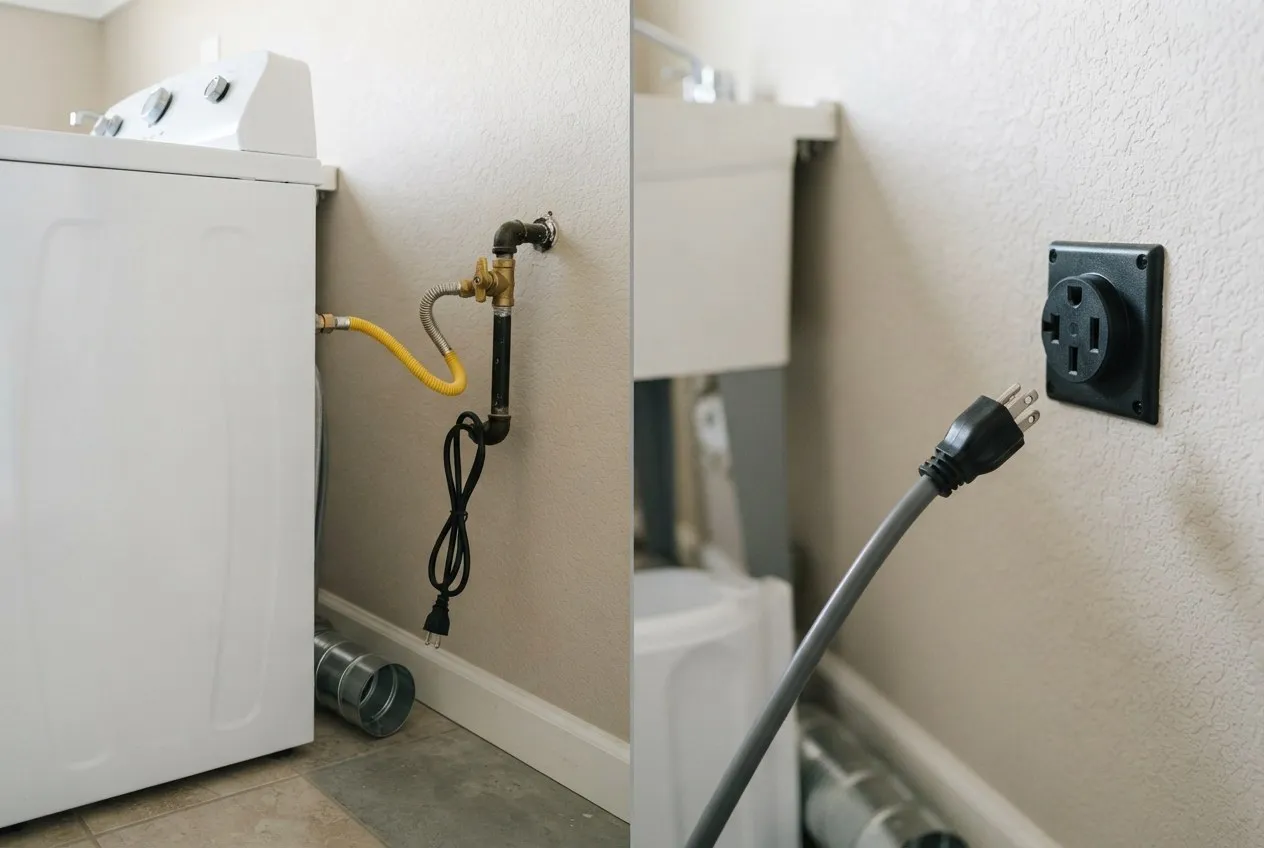
| Electric dryer | Gas dryer | |
|---|---|---|
| Power and fuel | 240-volt, 30-amp circuit on two breakers (Whirlpool) | Household outlet plus a gas supply line |
| Check first | Both breakers; if one trips, the motor can run with no heat | Shutoff valve open (handle parallel to the pipe); breaker or fuse |
| Parts that commonly fail | Heating element, thermal fuse, cycling or high-limit thermostat | Igniter, gas valve coils, flame sensor, thermal fuse |
| National repair cost (Fixr) | Heating element about $150-$250 | Igniter about $100-$250; gas valve coils about $150-$300 |
On both types, make sure nobody selected an air-only or air-fluff cycle. Whirlpool points out that those cycles never add heat. It also notes that an electric dryer won’t work correctly without a true 240-volt supply, which comes up after a move or a laundry room remodel.
A gas dryer that clicks but never lights, or lights for a few seconds and goes out, is pointing at the ignition side: igniter, flame sensor or valve coils. That pattern helps, but they aren’t a diagnosis. A technician should test the parts with a meter before replacing any of them.
Won’t start, won’t tumble, or makes noise
Heat isn’t the only thing that goes. Fixr’s national figures for the mechanical side:
- Belt: about $150-$250. A broken belt lets the motor run with the drum standing still. A worn one squeals.
- Drum rollers: about $50-$100. Rollers wear flat and thump or rumble with every turn.
- Motor: about $250-$450. A motor that hums but won’t turn the drum, or trips the breaker, is the likely suspect after the belt.
- Control board: priced case by case; ask for the part number and cost on the written estimate.
A dryer that won’t start at all may simply have a door switch that no longer registers the door as closed, or on some models a child-lock setting. Check the manual before paying for a visit.
If you smell gas, stop here
A rotten-egg smell near a gas dryer means you treat it as a leak. PG&E’s instructions are to warn everyone nearby and leave for an upwind spot, and not to use anything that could spark, including light switches, flashlights and cell phones, until you’re a safe distance away. Then call 911 and PG&E. Don’t run the dryer again until a qualified professional has checked it; NFPA advises having gas dryers inspected so the gas line and connection are intact and free of leaks.
Carbon monoxide is the quieter risk with any gas appliance. California’s Carbon Monoxide Poisoning Prevention Act (SB 183) has required CO alarms since July 1, 2011 in single-family homes that have a fossil fuel appliance or an attached garage, and since January 1, 2013 in other dwelling units that have them. If your gas dryer sits in a laundry room or garage without a working CO alarm nearby, add one before you worry about the repair.
What dryer repair costs, and when to replace
Fixr’s national average for dryer repair is about $150, with most jobs between $100 and $200. The low end is around $50 and the high end around $450. By fuel type, electric dryers run $50-$400 and gas dryers $100-$450, because gas models have more parts in the heating path. Diagnostic visits are typically $50-$80, and some companies credit that toward the repair. Local San Jose pricing may differ from these national numbers, so get the estimate in writing before work starts, as California law requires. The appliance repair cost guide compares dryers with the other large appliances.
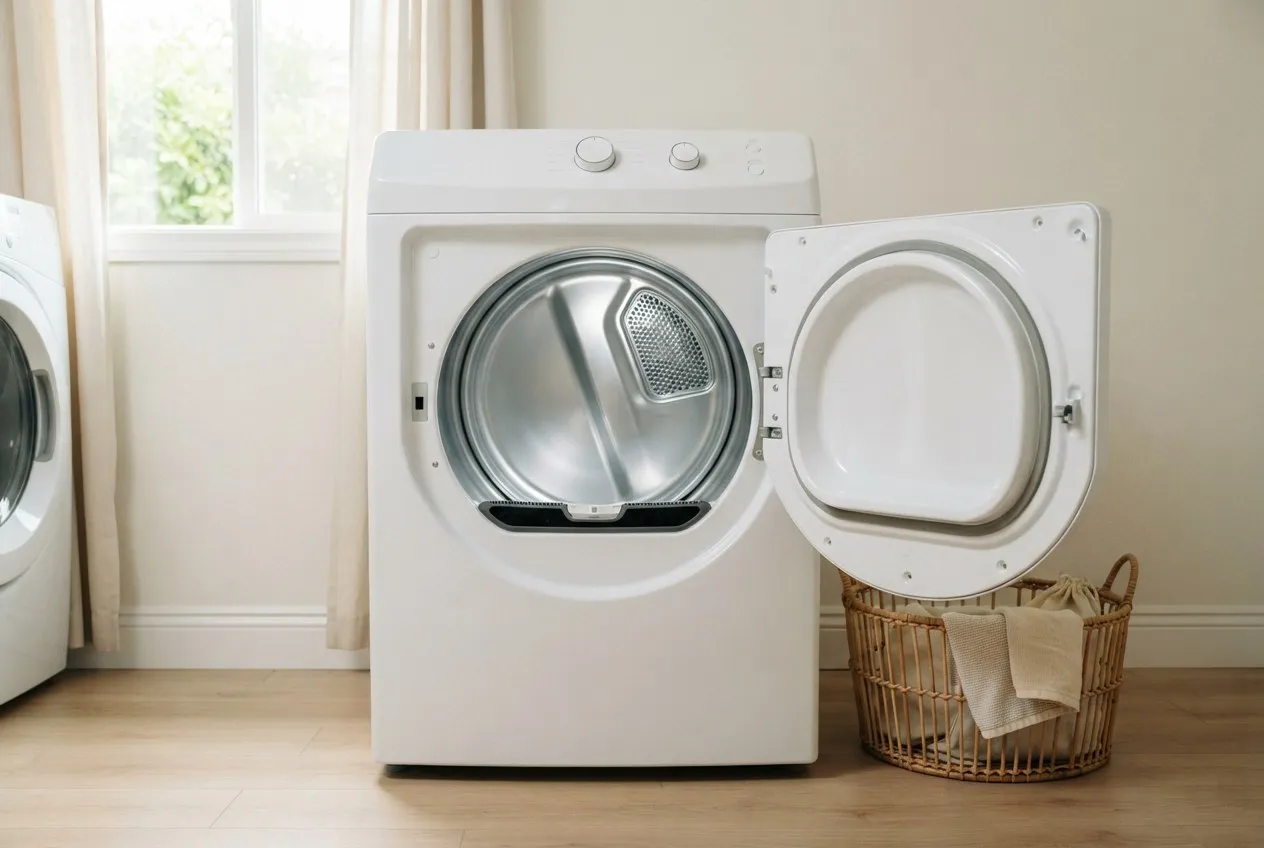
Most dryers last 8 to 12 years, according to Fixr, and some pass 15 with good maintenance. That puts a ten-year-old dryer near the end of the curve. A set of rollers at $50-$100 or a new belt is still worth doing on an old machine. A motor at $250-$450 on a dryer that age is the point to price a replacement. The repair or replace guide works through that decision. If the washer is also getting old, look at both at once; our washer repair page covers its warning signs.
Dryer brands and models covered
Dryers from Whirlpool, Maytag, LG, Samsung, GE and Electrolux, commercial-style Speed Queen machines, stacked laundry centers, and compact European ventless dryers from Miele and Bosch are all on the list. Ventless heat pump and condenser dryers don’t use an outside duct at all, so mention the type when you call. Owners of LG dryers and Samsung dryers can check warranty terms on those brand pages first, and any code showing on the display can be looked up in the error code library.
The service area stretches from San Jose to Cupertino, Los Gatos, Mountain View, Palo Alto, Sunnyvale, Santa Clara and Milpitas, plus Fremont in Alameda County. Give the fuel type along with your ZIP code so the company you’re matched with is set up for the right kind of dryer.
When you call, have the brand, the model number from the label inside the door or on the back, and whether it runs on gas or electricity. We’ll connect you with a local dryer repair company that covers your ZIP code.